
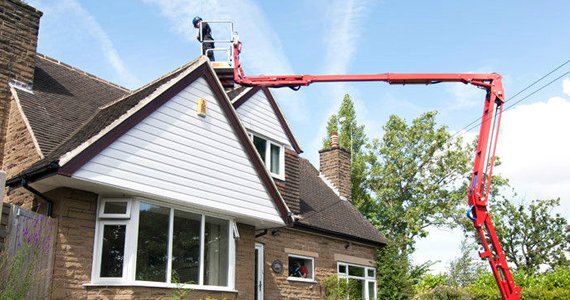
Tell us about your property — Regency terrace in Kemp Town, Victorian conversion in Hanover, Edwardian villa in Preston Park, or seafront apartment. We give you a fixed price on the phone from £195. No vague estimates, no hidden fees.
Our specialist surveyor assesses every element — Welsh slate condition, lead parapet details, stucco-to-roof junctions, chimney stacks, bow-front flashings, conversion flat roofs, valley and gutter systems. Typically 2-3 hours. We photograph everything.
Full written report with photographs, condition ratings, remaining lifespan estimates, responsibility mapping for converted properties, and a prioritised action list with budget figures. Clear answers, not surveyor jargon.
Brighton possesses an architectural stock unrivalled among England's seaside cities. The Regency period (1820s-1850s) created the grand stuccoed terraces that define the city — Kemp Town's Sussex Square and Lewes Crescent (designed by Charles Busby and Amon Henry Wilds, built by Thomas Cubitt for Thomas Read Kemp), Brunswick's classical terraces, Regency Square, and the Italianate villas of Montpelier and Clifton Hill. These properties feature characteristic bow-fronted facades, ornate stucco parapets, Welsh slate roofs behind parapet walls, lead-lined valley gutters, and elaborate chimney stacks — now 170-200 years old. A professional roof survey Brighton inspection understands how each of these period elements ages under direct Channel exposure.
Victorian expansion from the 1860s-1900s climbed Brighton's hills — the steep terraces of Hanover with their Welsh slate roofs pitched at acute angles, Seven Dials and Fiveways with their bay-windowed semis, and the residential streets radiating from Preston Park. Later came Edwardian development in Withdean, Patcham, and the wider suburbs. Post-war housing in Whitehawk, Moulsecoomb, and Hollingdean added concrete tile stock. Brighton Marina's modern developments and the New England Quarter provide contemporary contrast. This extraordinary range — from 1820s Regency stucco to 2020s marina apartments — means a roof survey Brighton assessment must match the right expertise to each construction era.
Brighton faces the English Channel directly, with prevailing south-westerly winds driving salt-laden air against every south-facing elevation. Seafront properties in Kemp Town and along Marine Parade receive the most intense exposure — salt crystallisation attacking lead flashings, eroding mortar joints, and accelerating slate delamination. But salt damage extends well inland: Hanover's hillside terraces, exposed on their south-facing slopes, suffer nearly as badly. Montpelier's sheltered position between hills provides some protection, while Preston Park's distance from the seafront reduces — but doesn't eliminate — salt exposure. Our roof survey Brighton assessment quantifies this exposure gradient for your specific property's location.
For homeowners: Whether you own a Regency flat in Kemp Town, a Victorian terrace in Hanover, or a family home in Preston Park, understanding how Brighton's salt exposure affects your specific roof material is essential. A £195 roof survey Brighton inspection gives you that clarity.
For buyers: Brighton property commands significant premiums. Before committing £400K-£1.5M+, specialist assessment identifies period deterioration and salt damage that standard surveys miss — hidden parapet failures, lead valley corrosion, and conversion-era flat roof problems that cost thousands to address post-purchase.
Nearby Areas: We also cover Hove (Brunswick, Aldrington, Portslade), Lewes, Shoreham, and Rottingdean.
A buyer purchased a two-bedroom first-floor flat in a converted Regency terrace on a street off Sussex Square for £485K. The building — originally an 1840s four-storey townhouse — had been converted into four flats in the 1990s. The purchase survey noted "communal roof in fair condition for age, some weathering." No specialist roof survey Brighton inspection was commissioned.
Year 1: Damp appeared in the top-floor flat after autumn storms. The freeholder arranged a roofer who replaced cracked slates behind the parapet wall and cleared the lead-lined valley gutter of debris. Cost shared between leaseholders: £350 each. Problem seemed resolved.
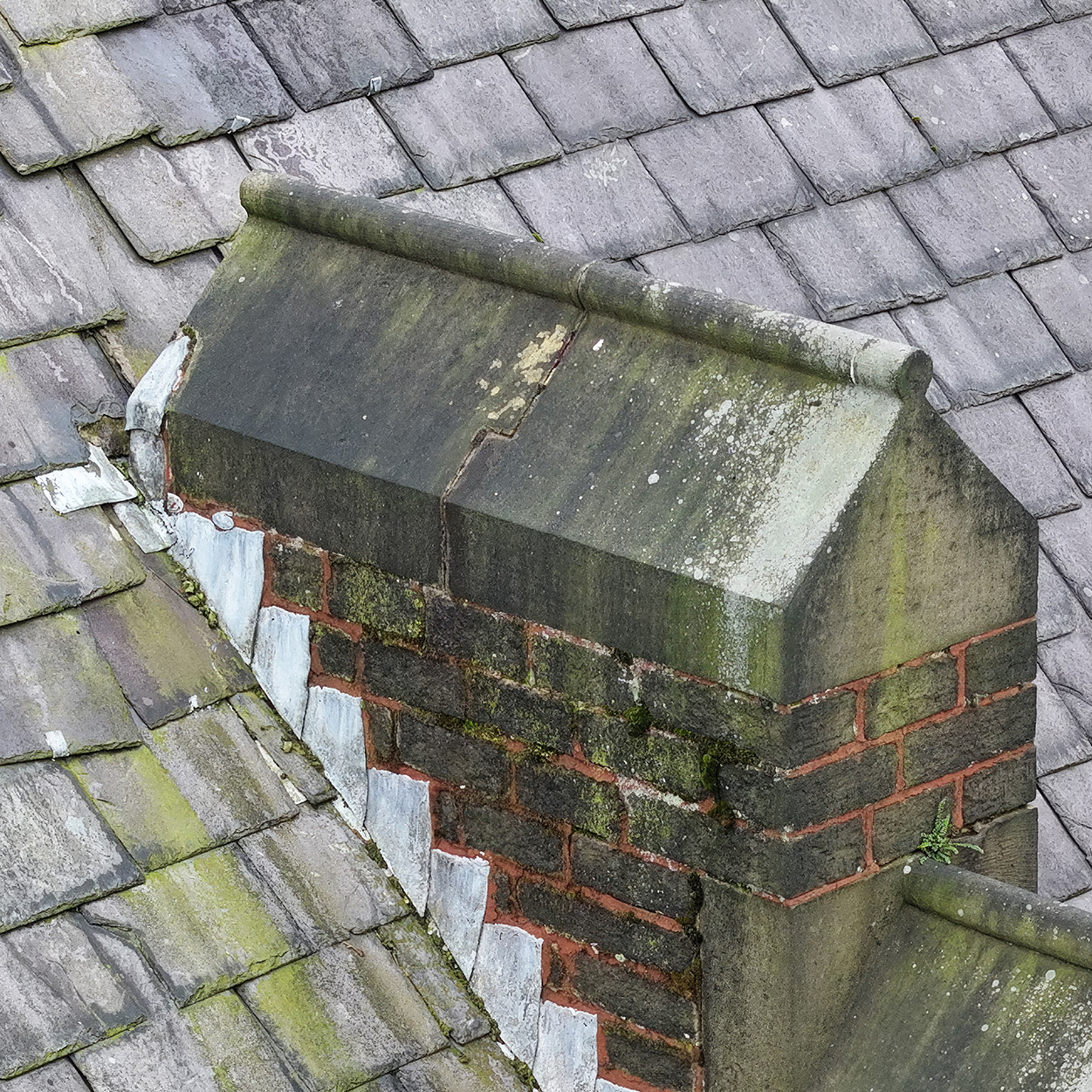
Year 2: Damp returned at the parapet wall junction — the critical interface where the stucco facade meets the roof behind Brighton's characteristic Regency parapets. Investigation revealed: decades of Channel salt had corroded the lead flashing where it dressed into the stucco, creating hidden water paths behind the render. The conversion-era flat roof over the rear ground-floor extension was ponding. The shared chimney stack mortar was salt-eroded and the stack had developed a slight lean.
Year 3: Multiple simultaneous failures — parapet lead corroded through in three locations, original Welsh slates delaminating on the sea-facing slope (180 years of salt wind), conversion flat roof membrane perished, and chimney stack requiring complete repointing with lime mortar. While four leaseholders spent months arguing over responsibility splits, water damage worsened. Comprehensive repair: £26,000-£32,000 shared — plus £6,000 additional damage from the six-month dispute delay.
What a Professional Roof Survey Brighton Assessment Would Have Shown: "This converted 1840s Regency terrace has four developing failure points accelerated by seafront salt exposure: parapet lead flashings corroded by salt crystallisation at three stucco junctions (strip and re-dress with Code 5 lead — £4,200, communal), south-facing Welsh slates delaminating from salt penetration (replace 30% — £5,800, communal), conversion flat roof membrane at end-of-life (re-cover — £2,400, communal), chimney stack salt-eroded mortar with 15mm lean (repoint with hydraulic lime, tie — £3,800, communal). Total budget: £16,200-£20,000. Parapet work most urgent. All sections communal per lease terms — recommend freeholder-coordinated programme over 18 months."
The Lesson: Brighton's Regency conversions combine 180+ years of period construction, intense Channel salt exposure, and complex shared ownership. A £195 roof survey Brighton inspection catches these problems before they become £32,000+ emergencies compounded by ownership disputes.


Professional roof surveys for Brighton's exceptional architectural stock require expertise spanning 200 years of construction — from Regency stuccoed parapets and lead valley gutters to Victorian Welsh slate on steep hillside pitches to post-war concrete tile on exposed hilltop estates. We combine RICS-registered qualifications with specific knowledge of how Channel salt exposure accelerates each material's deterioration, and how Brighton's extensive flat-to-conversion history creates shared ownership complexity that requires careful responsibility mapping.
For Brighton properties valued at £400K-£1.5M+, a £195 professional roof survey Brighton assessment is essential protection against the compound deterioration that period construction and Channel salt exposure create. We evaluate every system with era-appropriate expertise — Regency parapets and lead valleys, Victorian slate condition, conversion flat roofs, chimney stability — providing prioritised intelligence specific to your property's age, location, and salt exposure level.
We provide exact quotes when you call — most Brighton residential surveys from £195. Larger period properties and complex conversions priced on individual requirements. No surprises, no hidden costs.
At Brighton's price levels, standard surveys are dangerously inadequate for period properties. They miss parapet lead corrosion, salt-accelerated slate delamination, and hidden conversion defects. Before committing, a £195 roof survey Brighton assessment prevents expensive post-purchase discoveries.
Brighton's extensive conversion history means thousands of period buildings now house multiple leaseholders sharing communal roof responsibilities. Our reports map each element to clear ownership — preventing the disputes that delay repairs and inflate costs with additional water damage.
Channel salt exposure affects every Brighton property — but intensity varies dramatically from seafront Kemp Town to sheltered Montpelier to elevated Hanover. Our surveys quantify salt damage specific to your location and recommend appropriate materials for repair.
Brighton's Regency parapets hide roof condition from view — you can't assess slate condition, lead valleys, or flashing integrity from ground level. Professional assessment accesses what's behind the stucco facade, identifying deterioration invisible from the street.
Before loft conversions, extensions, or period restoration in Brighton's conservation areas, understand your roof's structural condition and which materials satisfy planning requirements. Our survey specifies period-appropriate solutions.
Brighton property values reflect the city's exceptional character and coastal lifestyle. Professional roof survey Brighton assessment from £195 protects that investment by catching salt-accelerated deterioration before it becomes emergency repair.
Channel salt crystallises within slate pores accelerating delamination, corrodes lead flashings and valley linings, erodes lime mortar from chimney stacks, and attacks iron fixings holding slates and ridge tiles. Seafront properties suffer most, but salt damage extends well inland — Hanover's exposed hillside terraces are nearly as affected as Marine Parade. Our surveys quantify salt damage levels for each property.
Slate or tile condition, parapet details (Regency properties), lead valleys and flashings, chimney stacks and mortar, conversion flat roofs, bow-front flashings, party walls, gutter systems, structural timber, and salt exposure damage. Each element assessed independently with prioritised recommendations and budget figures.
All Brighton including Kemp Town, Montpelier, Hanover, Seven Dials, Fiveways, North Laine, Preston Park, Queen's Park, Withdean, Patcham, Whitehawk, Moulsecoomb, Rottingdean, Saltdean, Woodingdean. Also Hove, Lewes, and Shoreham.
Most Brighton surveys take 2-3 hours. Larger Regency properties and complex conversions may require 3-4 hours. Detailed written report with photographs within 48 hours including responsibility mapping where applicable.
Absolutely. Brighton's Regency properties feature unique parapet wall construction where roofs sit behind decorative stucco facades — invisible from the street. We access the hidden roof behind the parapet to assess slate condition, lead-lined valley gutters, flashing integrity, and how salt penetration affects each element.
Roof surveys in Brighton start from £195 for standard residential properties. Larger Regency terraces and complex conversions are priced on individual requirements. We provide exact quotes when you call. No surprises. Call 07833 053 749 for an immediate price.
Brighton's transformation from medieval fishing village to fashionable Regency resort created an architectural legacy unmatched among English coastal cities. The Kemp Town estate (1823-1855) — with Sussex Square larger than London's Grosvenor Square and Lewes Crescent boasting a diameter 200 feet greater than Bath's Royal Crescent — represents the finest Regency residential development outside London. The Brunswick estate in neighbouring Hove provided a western counterpart. Montpelier, developed from the 1820s on Thomas Read Kemp's former landholdings, produced an extraordinary collection of Italianate villas, crescents, and terraces — Clifton Terrace, Powis Square, and Montpelier Villas among the most architecturally significant streets in Sussex.
Victorian expansion brought terraced housing to Brighton's hills — Hanover's steep streets climbing from the Lewes Road, the characterful Seven Dials neighbourhood, and the substantial villas of Preston Park. Much of this period stock — along with many Regency buildings — has been converted into flats, creating Brighton's distinctive multi-occupied building character. Kemp Town's grand townhouses, which became too expensive for single-family occupation as early as 1903 when Lord Rendell pioneered their conversion in Sussex Square, now typically contain four to eight flats each. This conversion history means Brighton's roof survey requirements differ fundamentally from unconverted housing stock.
For roof survey Brighton assessment, this heritage creates a specific challenge: how to evaluate 170-200 year old Regency construction, 120-150 year old Victorian slate roofs, and 1990s conversion flat roofs — all under intense Channel salt exposure, often within the same converted building. Professional assessment from £195 brings the era-specific expertise each construction type demands.
Kemp Town, Montpelier, Clifton Hill, Hanover, Seven Dials, Fiveways, North Laine, Preston Park, Queen's Park, Withdean, Patcham, Hollingbury, Whitehawk, Moulsecoomb, Hollingdean, Woodingdean, Rottingdean, Saltdean, Brighton Marina
Hove, Lewes, Shoreham, Rottingdean, Peacehaven
BN1 (Brighton central/Preston Park), BN2 (Kemp Town/Rottingdean/Saltdean), BN3 (Hove/Portslade)
Whether you own a Regency flat in Kemp Town, a Victorian terrace in Hanover, an Edwardian villa in Preston Park, or manage a portfolio of conversions across the city, professional roof survey Brighton assessment from £195 is essential protection. Brighton's combination of period construction, intense salt exposure, and complex shared ownership creates compound deterioration that standard surveys never detect. Understanding your specific property's condition — and its maintenance timeline — prevents the expensive emergencies that damage irreplaceable period interiors.
Call 07833 053 749 now for an immediate quote. Roof survey Brighton from £195. Detailed report within 48 hours. Priority service available.
