
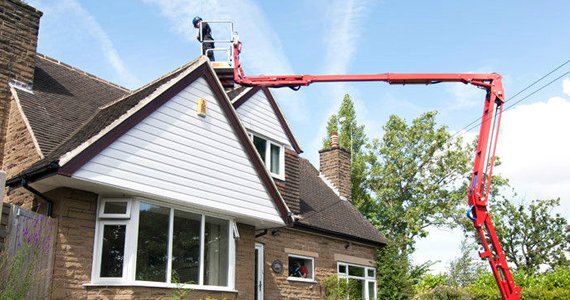
Tell us about your Peacehaven property — a 1920s or 1930s bungalow or semi on the chalk cliff grid, a property with flat roof sections or a lean-to addition, or a more recent property needing coastal exposure assessment. Price confirmed from £195 by phone immediately. No forms, no waiting.
Our specialist assesses every element specific to Peacehaven’s inter-war coastal stock. Concrete tile: porosity testing and loft inspection of felt underlay and batten condition — the two assessments that establish whether re-roofing is imminent or years away. Ridge and hip mortar: cohesion assessed against coastal salt exposure, not inland norms. Flat roof sections: membrane condition, upstand integrity, drainage assessment. Lead flashings: salt-accelerated corrosion assessed specifically.
Full written report with photographs, condition ratings, exposure-adjusted lifespan estimates, and a prioritised costed action list. Concrete tile: porosity verdict, carbonation assessment, re-roof window or maintenance programme. Ridge and hip mortar: coastal maintenance cycle established. Flat roofs: membrane condition and urgency. Lead flashings: salt corrosion assessment. Report within 48 hours.
Peacehaven is one of the most unusual settlements on the Sussex coast — a planned inter-war town laid out from 1916 onwards by developer Charles Neville on a rectilinear American-inspired grid of avenues and drives on the chalk cliffs between Brighton and Newhaven. The Meridian monument on the clifftop marks 0° longitude at the town’s southern edge. The BN10 postcode covers Peacehaven and adjacent Telscombe Cliffs and extends to Saltdean. Lewes District Council is the planning authority.
Peacehaven’s housing stock is defined by its inter-war origins: the overwhelming majority of properties are bungalows and semis built in the 1920s and 1930s, now 85 to 100 years old. These are not Victorian or Edwardian properties — there is no slate roofing tradition here. The roofing material throughout is concrete plain tile or concrete interlocking tile, installed when the properties were built and, in many cases, never replaced. Concrete tile at 85 to 100 years old is at or well beyond its original design lifespan. This is the single most important roofing fact about Peacehaven’s housing stock.
Concrete tile ages through a process called carbonation: atmospheric carbon dioxide reacts with the calcium hydroxide in the Portland cement matrix, converting it to calcium carbonate. This is a slow process that takes decades — but at 85 to 100 years, it is essentially complete on most of Peacehaven’s inter-war tiles. A fully carbonated concrete tile has significantly reduced resistance to freeze-thaw cycling and mechanical stress. The surface micro-cracks that form during the freeze-thaw cycles of each winter begin to propagate through a carbonated tile body rather than being arrested by the still-resilient cement matrix. The result is progressive tile face spalling, cracking, and eventually tile body fracture. The critical assessment problem is that carbonation is invisible from outside: a tile at advanced carbonation looks identical to a sound one from below or from ground level. Porosity testing — measuring water absorption at the tile surface — combined with loft inspection of felt underlay and batten condition are the only reliable assessments of where a 90-year-old Peacehaven concrete tile roof actually sits in its remaining service life.
Peacehaven’s cliff-top position at 60 to 80 metres above sea level, facing the English Channel to the south with no foreshore settlement or rising ground between the properties and the open sea, creates a salt exposure regime that is significantly more aggressive than inland properties or even sheltered coastal settlements. South-westerly winds driving across the Channel deposit salt ions on every exposed roof surface. Those salt ions enter ridge mortar, hip mortar, and chimney pointing joints in solution and recrystallise as moisture evaporates. The recrystallisation of salt within mortar pore structures is expansive — growing salt crystals exert pressure on the mortar matrix from within, disrupting cohesion progressively over repeated wet-dry cycles. The practical consequence is that ridge and hip mortar on Peacehaven bungalows requires attention on a cycle roughly half that of equivalent inland properties — 8 to 12 years rather than 15 to 20. Many homeowners manage recurring ridge mortar problems without understanding that the coastal exposure, not the quality of the previous repair, is shortening the service life.
Lead flashings at chimney stacks and around roof penetrations are subject to the same salt environment. Salt deposits accelerate the oxidation of lead at the surface and concentrate at the flashing-to-mortar interface, where wicking of salt-laden moisture into the bedding joint causes progressive adhesion failure. On Peacehaven properties, lead flashing service life is shorter than inland equivalents, and the assessment must account for coastal exposure rather than applying inland condition standards.
Many Peacehaven bungalows were extended or modified during the 20th century with flat roof lean-to additions, garage or outbuilding roof sections, and dormer extensions. Bitumen felt flat roofs installed in the 1960s, 1970s, and 1980s are typically 40 to 60 years old — well beyond their design life in any conditions, and significantly further beyond it in Peacehaven’s exposed cliff-top thermal environment, where summer surface temperatures on an unshaded south-facing flat roof are among the highest in England.
Nearby Areas: Coastal chalk cliff surveys across Telscombe Cliffs and Saltdean. Newhaven surveys at Newhaven. Brighton coastal coverage at Brighton. Wider BN10 coverage at Rottingdean.
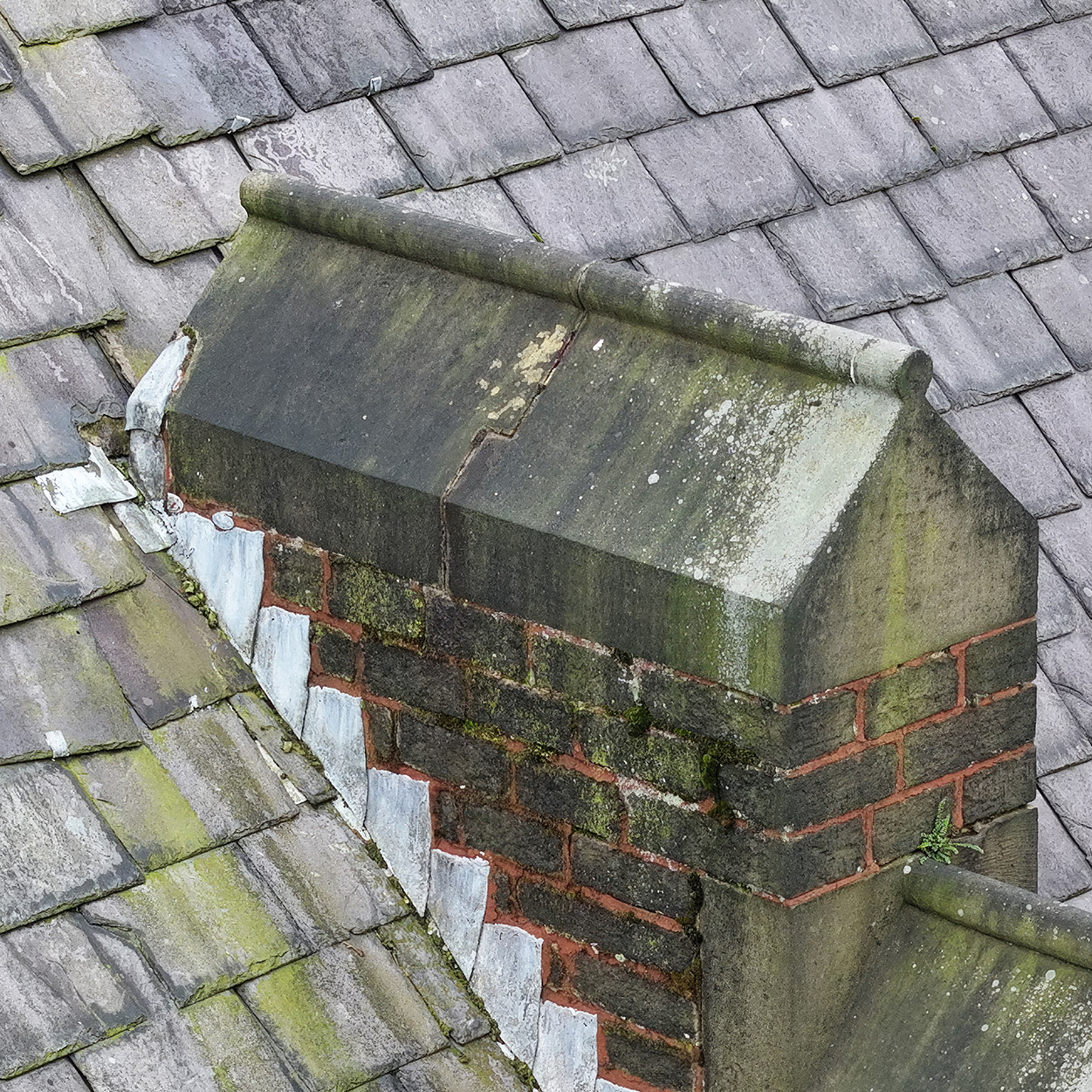


Peacehaven’s inter-war bungalow stock is facing a roofing reckoning that is specific to its age and its position. Concrete tile at 85 to 100 years in a direct Channel exposure environment has two compounding factors — extreme age and extreme exposure — that inland assessments do not account for. Establishing where a specific property actually sits in that timeline requires porosity testing and loft inspection, not a ground-level visual. The difference between “manageable for another 3 years” and “re-roof within 12 months” is a significant financial planning question for most Peacehaven homeowners, and the only way to answer it is with specialist assessment.
A couple made an offer on a 1934 bungalow in central Peacehaven with direct sea views. The property had its original concrete plain tile roof and a 1970s flat roof lean-to extension to the rear. The homebuyer survey described the roof as “concrete tile roof in generally fair condition with some areas of moss and lichen. Flat roof extension appears sound. Recommend specialist inspection given age of property.” The buyers commissioned a specialist survey before exchange.
Survey Findings: Concrete plain tile: porosity testing confirmed near-total water absorption across three sample sections of the main roof — tiles absorbing water at a rate consistent with end-of-life carbonation. Loft inspection revealed the original bitumen felt underlay had become brittle and was failing along the horizontal laps, with daylight visible through two sections on the south-facing slope. The battens beneath the felt were dry and serviceable, having been protected from moisture by the tiles and underlay until recently. The main roof required full re-tiling with new felt underlay. Ridge and hip mortar had been repointed within the past 8 to 10 years in Portland cement, but salt crystallisation had already caused surface cracking across most of the ridge and the front hip sections — coastal exposure making the repointing visibly aged beyond its years. Flat roof lean-to: 1970s bitumen felt at approximately 50 years old. Surface blistering across the full area, multiple splits at the upstand detail on the east wall, standing water ponding in a low section in the middle. Immediate replacement recommended before next winter season.
Programme and Negotiation: Main roof re-tiling with new concrete tile and breathable membrane: £9,500–£12,000. Flat roof replacement with GRP: £2,800–£3,500. Ridge and hip mortar: £800–£1,200 (noted as coastal-specification requirement using flexible polymer-modified mortar rather than standard OPC). Total programme: £13,100–£16,700. The buyers renegotiated £12,000 off the purchase price before exchange.
Survey cost: from £195. Pre-purchase assessment identified end-of-life tile, failed flat roof membrane, and the coastal mortar specification requirement before commitment. Saving through negotiation: £12,000.
An owner of a 1928 semi-detached property on the Telscombe Cliffs side of the BN10 postcode had repointed the ridge mortar three times in twelve years — in 2013, 2017, and 2021 — at a cost of £480, £550, and £620 respectively. Each time the same contractor attended, repointed in standard OPC mortar, and reported the ridge as “now in good condition.” By late 2023, the ridge mortar was visibly cracking again. The owner commissioned a specialist assessment before proceeding with a fourth round of the same repair.
Survey Findings: The ridge mortar condition was consistent with the pattern of accelerated salt crystallisation failure — the mortar was cracking at the surface and losing cohesion within 3 to 4 years of each repair because standard OPC mortar in this salt environment has an effective service life of precisely that duration. The correct specification for the coastal exposure was a polymer-modified flexible mortar designed to resist salt crystallisation cycling — a product that costs more to install but lasts significantly longer in this environment. The survey also identified that the concrete tile main body was approaching end-of-life: porosity testing confirmed above-average water absorption, and loft inspection showed the original felt underlay was dry but brittle across the rear slope. Re-roofing was not immediately required but was recommended within 3 to 5 years.
Outcome: The owner had the ridge repointed in polymer-modified mortar at a cost of £920 — higher than previous repairs but specified for the coastal environment. At the time of writing, the repair is holding at 18 months. The re-roofing was programmed for year 3–4, giving the owner time to budget and plan rather than responding to an emergency.
Three OPC mortar repairs over 12 years: £1,650. Correct coastal specification identified after specialist assessment: a single repair budgeted to last 3× longer, and a re-roofing programme planned in advance rather than triggered by failure.
Roof surveys for Peacehaven properties start from £195. Whether a 1920s or 1930s bungalow where the critical question is how much remaining service life the concrete tile roof actually has and whether the flat roof section is still waterproof; a recurring ridge mortar problem where the specification needs to be assessed against coastal exposure reality; or a pre-purchase survey on a cliff-top property where the roofing programme costs need to be known before exchange — call 07833 053 749 for an exact price confirmed immediately. Report within 48 hours.
Peacehaven bungalows are affordable homes in a spectacular coastal setting, and their owners deserve the same quality of specialist roofing information as buyers of far more expensive properties. The concrete tile roofs on these inter-war properties are reaching the end of their original design life at exactly the point where coastal exposure has been compounding their deterioration for nine decades. Independent specialist assessment tells you where your specific property sits in that picture — not a roofer’s quote in both directions. No repairs sold — honest assessment only.
A homebuyer survey on an inter-war Peacehaven bungalow will note the age of the concrete tile roof and recommend specialist inspection. It will not tell you whether the tile porosity is at early-stage or end-of-life deterioration, whether the 1970s flat roof lean-to is one winter away from failure, or whether the recurring ridge mortar issue is being repaired in the wrong specification. Specialist pre-purchase assessment answers all of these questions specifically, with programme costs for negotiation or for planning as the new owner — before exchange, not after.
If your Peacehaven bungalow’s ridge mortar has been repointed more than once in the past decade and is failing again, the coastal exposure specification is almost certainly wrong. Standard OPC mortar has a 3 to 4-year service life at Peacehaven’s salt exposure level — a coastal-specified polymer-modified mortar in the same position lasts significantly longer. Specialist assessment establishes the correct specification and breaks the cycle of repeat ineffective repairs.
Flat roof sections on Peacehaven bungalows — lean-to additions, rear extensions, garage roofs — are subject to the most extreme thermal cycling of any roof element in the property. A south-facing black bitumen felt flat roof on the Sussex chalk cliffs reaches surface temperatures in summer that would accelerate membrane failure in any location. If the flat roof section is 20 years old or more, specialist assessment of membrane condition, upstand integrity, and drainage is required before the next winter season rather than after the first ingress.
On a 90-year-old Peacehaven concrete tile roof, different roofers will give different opinions ranging from “fine for years yet” to “needs replacing immediately” — because ground-level visual inspection genuinely cannot distinguish between a tile at early carbonation and one at end-of-life. Porosity testing and loft inspection provide the objective data that a visual inspection from below cannot. Independent specialist assessment resolves the conflicting opinions with actual measurement rather than a second opinion from a contractor who is also quoting for the work.
On Peacehaven bungalows, chimney breast damp is typically caused by either lead flashing failure accelerated by salt corrosion at the abutment, or by chimney pointing failure under salt crystallisation. These require different remediation — lead replacement versus repointing — and the repointing specification must account for coastal exposure. Specialist assessment identifies the source and specifies the correct material, rather than applying standard inland repair protocols that will fail at the same accelerated rate as previous work.
For owners of 1920s and 1930s bungalows who are not yet facing visible problems, a specialist assessment establishes the actual remaining service life of the concrete tile and flat roof sections with enough lead time to plan and fund re-roofing as a planned capital expenditure rather than an emergency. On a property where re-roofing will cost £10,000–£16,000, a 3-year planning window is worth significantly more than a £195 survey cost.
The standard manufacturer design life for concrete tile is 50 to 60 years from new. At 85 to 100 years, Peacehaven’s inter-war concrete tile stock is 25 to 40 years beyond that notional design life. In practice, individual tiles can remain serviceable well beyond design life if the cement matrix quality was high at manufacture and if salt and freeze-thaw exposure has been moderate. In Peacehaven’s direct Channel exposure environment, neither condition fully applies. The only way to establish where a specific roof actually sits is porosity testing and loft inspection of felt underlay condition — there is no reliable rule-of-thumb for this stock in this location.
Standard OPC mortar (ordinary Portland cement and sand) is inappropriate for ridge repointing in Peacehaven’s salt environment. The correct specification is a polymer-modified flexible mortar designed for high-exposure coastal applications — the polymer additive maintains flexibility through thermal cycling, resisting the cracking that standard OPC mortar develops as it cures rigid in a thermally active environment. Some contractors also use proprietary ridge mortar products formulated specifically for coastal exposure. Our surveys specify the correct product category; contractors can confirm available brands.
Roof surveys start from £195. Call 07833 053 749 for an exact price confirmed immediately — no forms, no waiting.
We cover Peacehaven and the full BN10 postcode including Telscombe Cliffs and Saltdean, and the adjacent BN9 (Newhaven) and BN2 (Rottingdean, Ovingdean, and eastern Brighton) postcodes along the coastal chalk cliff strip.
A 1970s bitumen felt flat roof is 50 to 55 years old — typically two full replacement cycles past its original design life. At this age in Peacehaven’s thermal environment, repair of individual failed sections is almost never cost-effective: the membrane surface is uniformly aged even where it has not yet failed visibly. Specialist assessment confirms the membrane condition across the full area and upstand details, provides a replacement specification, and can assess whether the deck below the membrane has been compromised by any previous ingress. This is the information you need before deciding between repair and replacement — and we have no financial interest in which way the decision goes.
Completely. We survey only — no repairs sold, no contractor referrals. Our assessments reflect the actual condition of the property, with no interest in what the repair programme turns out to be.
Peacehaven offers some of the most affordable seafront-adjacent housing on the East Sussex coast, with the trade-off of its inter-war bungalow stock’s age and its exposure position. 1920s and 1930s bungalows and semis in Peacehaven range from £280,000 to £450,000 for standard properties, with cliff-edge and sea-view properties commanding premiums up to £550,000 or beyond. Telscombe Cliffs properties on the western side of the BN10 area are broadly similar. More recently built properties and those with significant extensions or improvements trade at the upper end of this range.
At these price levels, the roofing programme costs that are characteristic of Peacehaven’s stock — a full re-roof on an inter-war bungalow at £10,000–£16,000, a flat roof replacement at £2,500–£4,000, and ridge mortar and lead flashing maintenance on a coastal cycle — represent a meaningful proportion of the property value. For buyers, establishing the roofing position before exchange is not a luxury: it is the difference between buying with an accurate picture of first-year maintenance and discovering a re-roof requirement after completion. For existing owners, knowing the re-roofing window accurately allows planning rather than emergency response.
Lewes District Council is the planning authority. There are no specific conservation area constraints across most of Peacehaven’s grid streets, but planning consent is required for significant external changes including material change on visible roof sections.
Peacehaven, Telscombe Cliffs, Saltdean, and all streets throughout the BN10 postcode area on the chalk cliff coast between Brighton and Newhaven
Newhaven • Saltdean • Rottingdean • Brighton
BN10 (Peacehaven, Telscombe Cliffs, Saltdean), BN9 (Newhaven), BN2 (Rottingdean, Ovingdean, eastern Brighton)
Whether you’re buying an inter-war bungalow on the Peacehaven chalk cliffs and need concrete tile porosity, flat roof condition, and lead flashing status before exchange; dealing with ridge mortar that keeps failing and needs the correct coastal specification rather than another round of standard OPC; concerned about a 1970s flat roof lean-to facing its first serious winter assessment; or simply wanting to know your re-roofing window with enough time to plan rather than react — specialist assessment gives you the specific answers for your specific property in its specific coastal environment.
Call 07833 053 749 now. Price confirmed from £195 by phone immediately. Detailed written report with photographs, porosity test results, felt underlay and batten condition, coastal-adjusted mortar specification, flat roof assessment, and costed recommendations within 48 hours.
