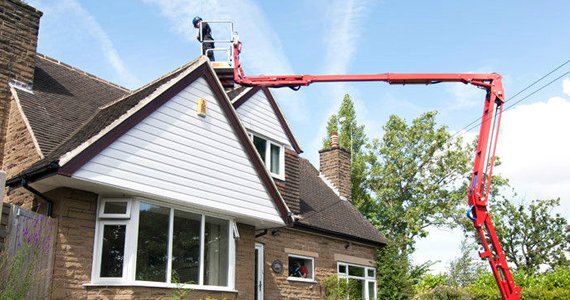
Tell us about your Petworth property — a 17th or 18th century town centre cottage with Horsham stone or plain clay tile, a Victorian or Edwardian terrace on the town periphery, a 20th century property on the edges, or a farmhouse or cottage in the surrounding GU28 villages within the National Park. Price confirmed from £195 by phone immediately. No forms, no waiting.
Our specialist assesses every element relevant to Petworth’s historic stock and frost-bowl position. Horsham stone: peg corrosion, slab integrity, structural loading assessment. Plain clay tile: ridge and verge lime mortar cohesion by probing, rated against Petworth’s above-average freeze-thaw cycle frequency. Portland cement incompatibility: frost spalling damage identified. SDNPA material requirements: repair specification consistent with National Park policy. Victorian and 20th century stock assessed on conventional terms.
Full written report with photographs, condition ratings, Petworth frost-cycle-adjusted lifespan estimates, and a prioritised costed action list. Horsham stone: peg assessment, slab condition, reclaimed sourcing options. Plain clay tile: lime mortar cohesion assessment and correct hydraulic lime specification for SDNPA work. SDNPA material policy: repair approach consistent with National Park requirements. Report within 48 hours — suitable for SDNPA consent applications and listed building submissions.
Petworth is a small market town of around 2,500 people in the western South Downs National Park, about ten miles north of Chichester. It is known for Petworth House — a 17th century mansion owned by the National Trust — and for a concentration of antique shops and galleries that make it a destination for period furniture and art buyers across the south of England. The GU28 postcode covers Petworth and the surrounding villages including Fittleworth, Duncton, Tillington, and Lurgashall. The South Downs National Park Authority is the planning authority for all development within Petworth — not Chichester District Council, which administers surrounding areas outside the National Park boundary.
Petworth’s town centre is tightly compact, with streets of historic buildings converging on the market square. The conservation area covers most of the historic town, and listed buildings are present throughout. The building stock reflects the standard West Sussex historic vernacular: Horsham stone slate on the oldest buildings, plain clay tile with lime mortar bedding and pointing on 17th and 18th century cottages and houses, greensand rubble stone walling, and the full range of Victorian and Edwardian materials on the town’s later development. The surrounding GU28 villages have a similar mix, with more rural farmhouses and cottages carrying Horsham stone and plain clay tile in proportions that reflect their earlier origin dates.
Petworth sits in a topographic hollow. The town occupies a depression in the landscape, with wooded hills rising to the north and east and the South Downs escarpment to the south. This bowl-like topography creates a frost-accumulation microclimate that is specific to Petworth and distinguishes it from similar-period properties on the surrounding higher ground. On still clear nights, cold dense air drains downhill from the surrounding ridges and collects in the hollow rather than dispersing. The result is that frost forms in Petworth’s town centre at temperatures that would not produce frost on the higher surrounding ground, and persists through the morning of days when the Downs above the town are clear. Over a winter, Petworth accumulates more freeze-thaw cycles than comparable properties a few miles away on elevated ground.
This matters for lime mortar roofing because each freeze-thaw cycle works on water absorbed into ridge mortar and verge bedding, expanding fractionally as it freezes and contracting as it thaws. The cumulative mechanical stress of an above-average number of cycles per winter accelerates mortar cohesion loss. On a plain clay tile cottage in Petworth’s town centre hollow, ridge and verge mortar that might last 18 to 22 years on higher ground requires attention after 12 to 15 years. Our surveys rate mortar condition and estimate remaining service life against Petworth’s frost cycle frequency, not standard West Sussex norms.
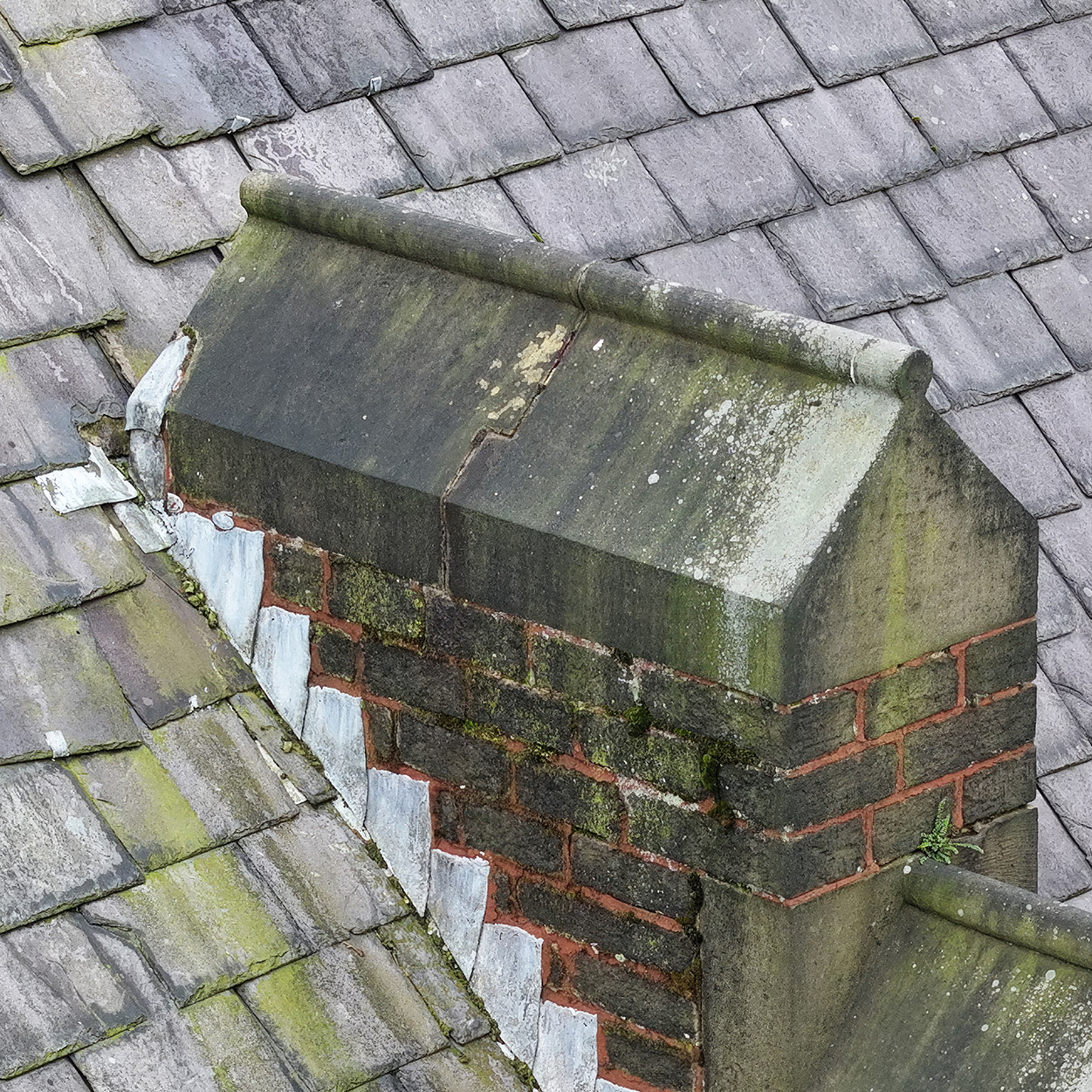
The Portland cement incompatibility problem that affects soft plain clay tile throughout West Sussex is if anything more consequential in Petworth because of the frost-bowl microclimate. Portland cement repointing on old handmade plain clay tile creates a hardness differential at the tile-cement interface; in a high-freeze-thaw environment, the cracking at this interface and the subsequent frost spalling of the tile face progresses faster than in a sheltered location. Getting the material specification right first time is more important in Petworth than it is in a sheltered West Sussex valley.
Nearby Areas: Plain clay tile and Horsham stone surveys across Midhurst and Pulborough. SDNPA village surveys at Fittleworth and Tillington. Wider GU28 coverage across Lurgashall.
Petworth’s frost-bowl microclimate is the factor that makes its historic lime mortar roofing assessment different from the same properties on the surrounding higher ground. A ridge mortar condition that a standard West Sussex survey would rate as having five or six more years of service life may have two or three years at Petworth’s freeze-thaw frequency. Getting this assessment right — with specific reference to the town’s topographic position, not generic regional norms — is the difference between planned maintenance and emergency repair on some of the most significant historic properties in the western South Downs National Park.
An owner of an 18th century plain clay tile cottage in Petworth’s town centre had the ridge mortar repointed by a local roofer in Portland cement in 2017. The roofer confirmed it was “solid” after the repair. By winter 2019–20, the owner noticed hairline cracking along the ridge mortar runs on the front south-facing slope. A second roofer attended and advised “monitoring”. By winter 2021–22, three sections of tile face on the front slope had spalled, with fragments appearing in the gutter below. The same second roofer replaced the three tiles and repointed the affected areas, again in Portland cement. By spring 2023, two further tiles had spalled and the ridge mortar was visibly cracking in multiple locations. A specialist assessment was commissioned.
Survey Findings: The original plain clay tile on the front slope was handmade 18th century material — soft-fired, porous, with a tile body significantly softer than the Portland cement mortar that had been applied in 2017 and 2021. The mechanism was clear: Portland cement curing against a soft tile body creates a hardness differential at the joint. As temperatures fall below zero in Petworth’s frost-accumulating hollow, the interface between the hard cement and the softer tile expands and contracts at different rates. Water entering the hairline crack that forms at the interface freezes and spalls the tile face from within. In a standard inland West Sussex location, this process might take four or five winters to produce visible tile spalling. In Petworth’s frost bowl, the same process produced visible damage within two winters of the original cement repoint, and had been compounded rather than arrested by the second repair in the same material.
Extent and Remediation: Survey identified cement-induced spalling affecting 11 tiles on the front slope and a further 4 tiles adjacent to the chimney stack where a cement flashing fillet had also been applied. Remediation: removal of all Portland cement mortar from the full ridge run and chimney abutments; tile-by-tile inspection of the tiles beneath; replacement of irreparably spalled tiles with reclaimed 18th century plain clay tile to SDNPA specification; repointing of ridge and abutments in natural hydraulic lime (NHL 2 in this case, matched to the soft tile body hardness). Programme cost: £2,100–£2,900 depending on reclaimed tile sourcing. The SDNPA conservation area designation required like-for-like tile material and hydraulic lime mortar specification — Portland cement would not have received consent even if it had been appropriate for the tile.
What a Specialist Survey Before the 2017 Repair Would Have Found: “Ridge mortar: lime mortar showing surface erosion consistent with 15 to 18 years of frost-cycle weathering in Petworth’s hollow microclimate. Tile body: handmade 18th century soft-fired plain clay tile in sound structural condition with no evidence of spalling. Repointing required. Specification: natural hydraulic lime NHL 2 matched to tile body hardness. Portland cement must not be used — hardness differential will cause frost spalling at tile-cement interface within 2 winters in this frost-bowl position. SDNPA conservation area requires lime mortar. Budget for hydraulic lime ridge repoint: £420–£580.”
Survey cost: from £195. Portland cement repairs in 2017 and 2021 totalling approximately £750 caused 15 tiles to spall in Petworth’s frost bowl within six winters. Remediation cost: £2,100–£2,900. Correct hydraulic lime repoint at the outset: £420–£580.
Roof surveys for Petworth properties start from £195. Whether an 18th century plain clay tile cottage in the conservation area where lime mortar cohesion, Portland cement incompatibility, and Petworth’s frost-bowl adjusted service life are the key questions; a Horsham stone farmhouse in the GU28 villages where peg condition and slab integrity need establishing honestly; a pre-purchase survey on a listed property where the repair programme and SDNPA specification need establishing before exchange; or a Victorian or 20th century property where conventional concrete tile assessment is needed — call 07833 053 749 for an exact price confirmed immediately. Report within 48 hours.
In Petworth’s frost bowl, a £195 survey before any ridge repair is commissioned is not a precaution — it is the tool that determines whether a £500 repair lasts or becomes a £2,500 remediation programme within three winters. Correct lime specification, calibrated to the frost microclimate and SDNPA requirements, every time. No repairs sold — honest assessment only.
Pre-purchase questions for a Petworth town centre cottage or listed building include: what is the actual cohesion of the ridge and verge lime mortar when probed; has Portland cement been applied previously, and if so has it caused tile face spalling; what is the current and projected service life of the lime mortar at Petworth’s frost-cycle frequency; and what is the SDNPA-compliant specification for any required repair? These go well beyond what a homebuyer survey addresses. Specialist pre-purchase assessment answers them specifically, with programme costs as a negotiating basis before exchange.
If ridge mortar on a Petworth plain clay tile property has been repointed and failed within two to three winters, Portland cement incompatibility in a frost-bowl environment is the most likely explanation. Specialist assessment confirms the mechanism, maps the extent of any tile spalling caused, and specifies the correct natural hydraulic lime mix — typically NHL 2 or NHL 3.5 depending on the tile body hardness — for future work that will last at Petworth’s freeze-thaw frequency rather than the standard West Sussex cycle.
Horsham stone roofing requires specific knowledge that a standard survey does not provide: assessment of iron peg corrosion and the extent of peg section loss, slab integrity testing for body cracking at fixing holes, structural assessment of the roof structure under the weight loading of the stone (three to five times a clay tile equivalent), and an honest discussion of replacement options. Commercial Horsham stone quarrying ceased in the 20th century; replacement material must come from reclaimed salvage from demolition or re-roofing of other stone properties. The scarcity and cost of reclaimed stone is part of the picture any buyer or owner of a Horsham stone property needs to understand. Our surveys address this directly.
The South Downs National Park Authority requires that repair and replacement work on properties within the National Park is carried out in materials and methods consistent with the local vernacular. For roof work, this means hydraulic lime mortar at ridges and verges, like-for-like material replacement (plain clay tile for plain clay tile, Horsham stone for Horsham stone where possible), and no change of covering material without prior consent. Our surveys specify repair approaches consistent with SDNPA policy and can provide the technical evidence basis for consent applications where the scope of work requires formal approval.
If tile face fragments are appearing in the gutters of a Petworth plain clay tile property following recent ridge or verge work, Portland cement-induced frost spalling is the most likely cause — and in Petworth’s frost bowl, the progression from first repair to visible tile damage is faster than in sheltered inland locations. Specialist assessment maps the extent of affected tiles, identifies and removes the incompatible cement, assesses which tiles can be conserved and which require replacement with reclaimed period material, and specifies the hydraulic lime mix for the remediation work.
The GU28 villages including Fittleworth, Tillington, Duncton, and Lurgashall have the same historic building stock as Petworth town centre but without the frost-bowl topographic effect — higher-lying village sites drain frost more effectively. Assessment of these properties uses the same lime mortar and Horsham stone expertise but calibrated to the specific site exposure rather than the town centre hollow microclimate.
NHL stands for Natural Hydraulic Lime. The number refers to the compressive strength class: NHL 2 is the softest and most flexible grade, NHL 3.5 is medium strength, and NHL 5 is the strongest natural hydraulic lime. The selection of the correct grade depends on the substrate it is applied to. On 18th century handmade plain clay tile — a soft-fired porous tile body — NHL 2 or NHL 3.5 is appropriate because it cures to a hardness that matches the tile body rather than exceeding it. A mortar harder than the substrate will crack the substrate under thermal cycling. In Petworth’s frost bowl, using NHL 5 on a soft handmade tile would cause cracking at the mortar-tile interface within a few winters — for the same physical reason that Portland cement causes spalling, but at a lower severity. Getting the grade right requires knowing the approximate hardness of the tile being pointed, which requires close-range visual and physical assessment of the tile body.
Not directly, in most cases. Like-for-like repair in the same material — hydraulic lime repointing replacing existing lime mortar, plain clay tile replacement with equivalent plain clay tile — does not require prior consent and adds no planning cost. The cost difference relative to Portland cement repairs is in the material and labour: hydraulic lime mortar costs more than Portland cement and takes more skill to apply correctly. The difference is typically £100–£200 on a ridge repoint of a terraced property — a cost that is insignificant compared to the tile remediation required when the cheaper incorrect material causes spalling over two or three winters in Petworth’s frost bowl.
Roof surveys start from £195. Call 07833 053 749 for an exact price confirmed immediately — no forms, no waiting.
We cover Petworth town and the full GU28 postcode including Fittleworth, Tillington, Duncton, Lurgashall, Northchapel, and surrounding villages within the South Downs National Park, and the adjacent GU29 (Midhurst) and RH20 (Pulborough, Storrington) areas.
Frost-bowl or frost-hollow topography affects a number of West Sussex towns and villages that sit in topographic depressions. Petworth is among the more pronounced examples in the region because the surrounding wooded hills create a well-defined drainage basin for cold air. Similar but less pronounced effects occur at other hollow-sited settlements. The key point for roofing assessment is that the frost cycle frequency needs to be assessed for the specific site, not applied as a regional average. For properties in the surrounding villages at higher elevations, the frost-bowl adjustment to lime mortar service life does not apply.
Completely. We survey only — no repairs sold, no contractor referrals. For Petworth homeowners deciding whether lime mortar needs replacing now or has further service life, or whether tile spalling requires immediate remediation or monitoring, independent assessment with no financial interest in the answer is the only sound basis for decisions about historic building fabric.
Petworth attracts buyers seeking an established historic market town within the South Downs National Park — the combination of antique dealers, galleries, a strong local character, and easy access to Chichester and the coast makes it a consistent destination for buyers of period property in western West Sussex. Town centre listed cottages and houses range from £450,000 to £800,000+, with larger unlisted town centre properties from £400,000 to £600,000. Victorian and Edwardian properties on the town periphery range from £350,000 to £550,000. Farmhouses and larger houses in the surrounding GU28 villages trade from £600,000 to £1.5M+.
For buyers of historic town centre properties, the roofing programme costs that are specific to Petworth — a hydraulic lime ridge repoint at £420–£600 on a standard terrace house, Horsham stone peg replacement or partial re-stoneing at £3,000–£8,000+, and the cost of correctly specified SDNPA-compliant repair work throughout — need to be established before exchange. The difference between a property where all lime mortar is mid-cycle (three or four years of service life ahead at Petworth’s frost frequency) and one where it is at end of cycle (requiring relaying this season) is the difference between two very different ownership experiences in the first three years.
The South Downs National Park Authority is the planning authority. Conservation area designation applies to most of the historic town. Listed buildings are numerous. SDNPA has a local development framework that sets specific policies for development within the National Park, including roof materials and methods. Our surveys are prepared to the technical standard appropriate for SDNPA consent applications and listed building submissions.
Petworth town and all streets within the conservation area, plus the surrounding GU28 villages including Fittleworth, Tillington, Duncton, Lurgashall, Northchapel, Wisborough Green, and Kirdford throughout the South Downs National Park and Chichester District
Midhurst • Pulborough • Billingshurst • Chichester
GU28 (Petworth, Fittleworth, Tillington), GU29 (Midhurst, Easebourne), RH20 (Pulborough, Storrington), RH14 (Billingshurst, Wisborough Green)
Whether you’re buying a listed cottage in Petworth’s conservation area and need lime mortar cohesion, Portland cement incompatibility diagnosis, and Petworth frost-cycle adjusted service life before exchange; dealing with ridge mortar and tile spalling that has progressed faster than expected after a recent repoint; planning SDNPA-compliant repair work and need the correct material specification; or assessing a Horsham stone farmhouse in the GU28 villages — specialist assessment gives you the specific facts for the specific material in its specific frost-bowl or village position.
Call 07833 053 749 now. Price confirmed from £195 by phone immediately. Detailed written report with photographs, frost-cycle-adjusted mortar condition ratings, Portland cement damage assessment, correct NHL lime specification, SDNPA-compliant repair approach, and costed recommendations within 48 hours.