☆☆☆☆☆ Trustpilot | Independent Waltham Forest Roof Survey Specialists Call for Roof Survey 07833 053 749 Free Quote
Roof survey Waltham Forest London Victorian terrace rear outrigger valley and party wall flashing assessment E17 E4 E10 E11

Roof Survey Waltham Forest London

  • Complete Roof Condition & Structural Assessment
  • Detailed Report in 48 Hours
  • Detailed Photo-Supported Reports from £195
  • Independent Expert Assessment - No Sales Bias

How Your Waltham Forest Roof Survey Works

1

Call & Get an Exact Price

Tell us about your Waltham Forest property — a Walthamstow Victorian terrace where the rear outrigger lead valley condition and party wall flashing integrity need assessing before exchange or after recurring rear room damp that hasn’t responded to main slope repairs; a Chingford inter-war semi near Epping Forest where debris accumulation in valley gutters and forest-edge exposure on ridge and hip mortar need specialist rating; a Leyton or Leytonstone terrace where differential settlement and chimney movement need geological context; or a pre-purchase survey where the full programme cost needs establishing. Price confirmed from £195 by phone immediately.

2

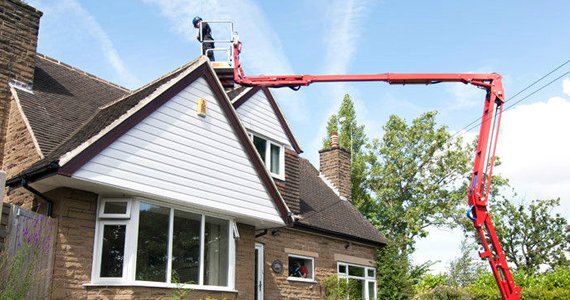
We Survey Your Roof

Our specialist assesses every element relevant to Waltham Forest’s stock. Walthamstow terraces: rear outrigger valley cleared and lead assessed at accessible points — pitting depth, upstand mortar, drainage falls. Party wall flashing: mortar course condition and gap at flashing bed rated against clay movement context. Welsh slate: nail-sickness proportion assessed at close range by slope. Chingford semis: hip and ridge mortar rated against forest-edge exposure; valley debris quantified. Chimneys: London clay and Lea Valley differential movement assessed. Report within 48 hours.

3

Detailed Report in 48 Hours

Full written report with photographs, condition ratings, remaining service life estimates, and a prioritised costed action list. Rear outrigger valley: urgency rating with replacement specification and lead grade. Party wall: flashing gap measurement and correct flexible-lime repair specification. Nail-sickness: extent by slope with re-slating timeline and targeted vs full re-slate determination. Chingford: hip run ratings and debris clearance findings. Pre-purchase reports with full programme costs for informed exchange decisions. Report within 48 hours.

Waltham Forest is one of the most sharply differentiated boroughs in terms of its housing stock and its roofing challenges. The southern half — Walthamstow (E17), Leyton (E10), and Leytonstone (E11) — is almost entirely Victorian and Edwardian terraced housing built in the decades following the railway expansion of the 1870s to 1900s, producing the dense grid streets that now define the residential character of these areas. The northern half — Chingford (E4) and the upper Walthamstow streets approaching Epping Forest — is predominantly Edwardian and inter-war semi-detached stock, built as the forest fringe was developed for the expanding suburban population of the early 20th century. Each half of the borough presents distinct assessment requirements; what applies to a Walthamstow Victorian terrace does not apply to a Chingford inter-war semi, and vice versa.

Walthamstow’s Victorian terraces share a construction feature that makes them distinctive and that defines their most common roofing failure: the rear outrigger. The outrigger is not a later addition — it is integral to the original design, built at the same time as the main house as a single-storey or two-storey rear projection containing the kitchen and scullery of the working-class households for which these streets were developed. Because the outrigger is lower than the main rear slope, the junction between the two roof planes requires a lead valley gutter — a horizontal channel running along the base of the main rear slope where it meets the outrigger section, carrying all the water that drains from the entire rear roof area to a downpipe at the corner of the outrigger. This valley has been accumulating organic debris from Walthamstow’s densely planted street trees and mature garden planting since the house was built. Compacted leaf litter from London planes, limes, and oaks holds moisture against the lead surface continuously rather than shedding it cleanly, and the lead — which in most cases is the original material at 115 to 140 years of age, having exceeded its nominal 60 to 80-year service life by a margin of 40 to 60 years — develops through-thickness pitting at the points of greatest continuous moisture contact.

When the outrigger valley fails, the pattern of discovery is consistent: water staining appears at the rear bedroom ceiling or at the kitchen ceiling beneath the outrigger section. The owner calls a roofer, who goes onto the main rear Welsh slate slope, finds some weathered ridge mortar or a few slipped slates, patches those, and charges for the work. The damp continues, because the valley at the outrigger junction — which is the actual source — is not accessible from the main slope without specifically going to look at it. On a second or third visit, the roofer may notice the valley, but at this point the damage to ceilings and potentially to the timber structure of the outrigger has already accumulated. Our surveys assess the rear outrigger valley as a specific inspection item, clearing debris at accessible points and assessing the lead condition, upstand mortar, and drainage falls independently of the main slope assessment.

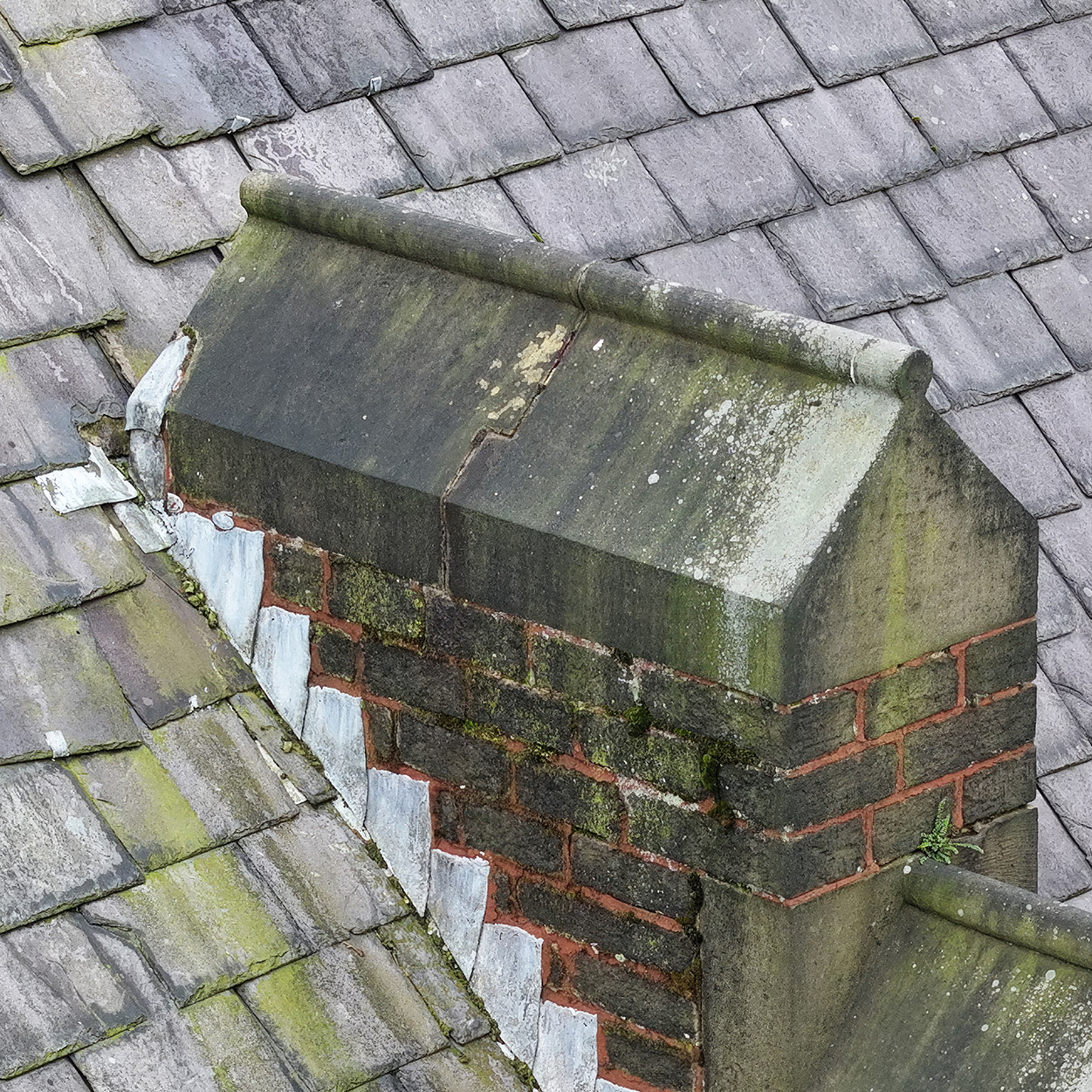
The second Walthamstow-specific challenge is the party wall. Walthamstow’s grid streets are continuous terraces — typically eight to fourteen houses sharing the same continuous roofline, with lead flashings tucked into mortar courses in the shared party walls at each property boundary. London clay shrink-swell produces differential seasonal movement between adjacent properties. Two houses in the same terrace, built identically and on the same date, may move slightly differently over 115 to 140 years of seasonal cycling because the clay depth, foundation detail, and moisture content beneath each individual house varies along the terrace length. This differential movement progressively opens the horizontal mortar courses in the party wall brickwork where the lead flashings are bedded, creating gaps through which water tracks down the inner face of the party wall into the structure of both properties simultaneously. The standard repair — re-pointing the mortar courses with OPC — fails within one to two seasonal cycles because the OPC mortar is too rigid to accommodate the continuing differential movement. Correct repair requires flexible hydraulic lime pointing at the flashing bed, which accommodates seasonal movement rather than cracking against it.

In Chingford, the assessment priorities shift substantially. The inter-war hipped semis of E4 — built in the 1920s and 1930s along the streets that extend from Chingford station toward the Epping Forest boundary — carry concrete or clay tile roofs at 85 to 100 years, with the standard inter-war hip mortar concentration across four junctions per property. The Chingford-specific addition is the forest edge. Properties on the streets adjacent to Epping Forest are beneath the canopy of mature oaks and beeches whose leaf litter, acorns, and catkin fall fills valley gutters at the rate of several centimetres per year in heavy tree years. The tannin content of oak debris is specifically aggressive to lead surface finishes, accelerating pitting relative to the rate seen in open urban valley gutters without tree debris. The Chingford plain also sits at 75 to 85 metres above sea level — considerably higher than the Walthamstow valley at 15 to 25 metres — producing greater south-westerly exposure on ridge and hip mortar, with service life of 15 to 18 years rather than the 18 to 22 years of the more sheltered valley streets.

In Leyton and lower Leytonstone, the Lea Valley alluvial geology introduces a different chimney movement context. The lower Leyton streets near the Lea Valley Regional Park sit on river terrace gravel and alluvial clay rather than the London clay of the higher Walthamstow and Chingford ground. Properties at the boundary between the gravel terrace and the clay can experience differential settlement between the gravel-founded front and the clay-influenced rear, producing chimney step flashing abutment opening in a pattern that — as in Sutton’s clay-chalk boundary area — requires geological context to interpret correctly rather than repeated mortar repointing that will not address the structural cause.

Nearby Areas: Victorian terrace surveys across Hackney and Redbridge. Leyton and Leytonstone coverage at Newham. Wider E postcode coverage including Enfield and Tower Hamlets.

Waltham Forest roof survey - Walthamstow Victorian terrace rear outrigger valley party wall flashing and Chingford Epping Forest inter-war semi assessment E17 E4 London

Waltham Forest Roofing We Assess

  • Rear outrigger valley gutter: Debris cleared and lead pitting assessed at accessible points — the most commonly misidentified source of rear room ingress on Walthamstow terraces, invisible from the main slope above it
  • Party wall flashing: Mortar course gap measurement and clay differential movement assessment — the cause of water tracking into both properties, requiring flexible-lime repair not OPC repointing
  • Welsh slate nail-sickness: Close-range individual assessment by slope across Walthamstow, Leyton, and Leytonstone terraces at 115–140 years
  • Chingford Epping Forest valley debris: Oak and beech litter accumulation quantified and lead pitting assessed with tannin-accelerated corrosion context
  • Forest-edge hip and ridge mortar: Service life rated against Chingford plateau exposure — shorter cycle than the sheltered Walthamstow valley streets
  • Lea Valley chimney movement: Differential settlement between gravel terrace and clay geology assessed for lower Leyton properties

Our Waltham Forest Coverage Area

Roof survey Waltham Forest professional accreditations Waltham Forest London roof inspection certifications

Walthamstow’s Victorian terraces have a rear outrigger valley that has been failing gradually for decades while main slope repairs have been commissioned and paid for as the assumed source of rear room damp. The party wall flashing that has been opened by differential clay movement has been repointed with mortar that cracks and reopens within 18 months. The nail-sickness proportion on the Welsh slate has been accumulating invisibly while slipped individual slates have been replaced one by one. Three separate failure processes, each requiring its own correct assessment and specification, each invisible from the street, each generating costs when discovered through water damage rather than proactive inspection.

The Valley Nobody Looked At — Walthamstow Victorian Terrace E17

Pre-Purchase Scenario — 1897 Victorian Terrace, Walthamstow E17

A couple purchased an 1897 three-bedroom Victorian terrace in a residential street off Hoe Street in Walthamstow for £585,000. The property had a rear outrigger containing the kitchen, with the original lead valley gutter at the junction between the main rear slope and the outrigger section. The homebuyer survey noted “Welsh slate roof showing age-consistent weathering, some slippage on rear slope, recommend monitoring. Chimney stack appears stable.” No specialist survey was commissioned before exchange.

Year 1: During November rain, water staining appeared at the kitchen ceiling — the ceiling within the outrigger section directly below the rear valley. A roofer attended, went onto the main rear slope, found three slipped slates and re-bedded a section of ridge mortar. Cost: £420. The kitchen ceiling staining appeared to dry out over the following weeks and the owners assumed the repair had worked.

Year 2: The kitchen ceiling staining returned in October before any particularly heavy rain event, which the owners found puzzling. A second roofer attended, replaced two further slipped slates on the rear slope and repointed the chimney cap mortar. Cost: £580. He noted the lead valley at the outrigger junction was “getting on a bit” but said it wasn’t leaking visibly. The kitchen staining continued intermittently. The owners also noticed a damp patch appearing on the rear bedroom wall adjacent to the party wall boundary with the neighbouring property. A solicitor’s letter arrived from the neighbour’s managing agent noting water damage to the neighbour’s rear bedroom ceiling, claiming the party wall flashing on the subject property was the source and requesting a contribution to repair costs.

Year 3: The owners commissioned a specialist assessment to respond to the neighbour’s claim and to address the continuing kitchen ceiling damp. Full findings:

(1) Rear outrigger valley — primary assessment: The lead valley gutter at the junction between the main rear slope and the outrigger section was found to contain compacted organic debris to a depth of approximately 90mm across its full 3.6-metre length. After partial debris clearance at the accessible end, the lead surface beneath showed pitting corrosion at multiple points, with two areas of through-thickness failure — pin-holes measuring approximately 2mm and 4mm in diameter — at the deepest accumulation points near the centre of the valley run. Water was entering through these through-failures whenever the valley filled to above the level of the pin-holes, which occurred in any prolonged or heavy rain event. The source of the kitchen ceiling damp was confirmed as the outrigger valley, not the main rear slope. The two years of main slope slate replacement and ridge repointing had addressed neither source nor symptom. Valley lead replacement required immediately: 3.6-metre run, Code 6 lead to uplift specification, upstand mortar at both sides in hydraulic lime. Budget: £1,800–£2,400.

(2) Party wall flashing — gap assessment: The lead flashing at the party wall boundary on the right-hand side of the property was inspected at roof level. The horizontal mortar course in which the lead was bedded showed a gap of 7 to 10mm at the flashing edge across a run of approximately 2.2 metres — the flashing was no longer sealed into the brickwork but sitting in the widened joint with water able to track behind it and down the inner party wall face. This gap was the source of the damp patch at the rear bedroom party wall and the water damage in the neighbouring property. The gap was consistent with differential clay movement between the two properties over many years of seasonal cycling. The correct repair: rake out the existing mortar from the flashing bed, re-tuck the lead with additional mechanical fixings if required, and repoint in flexible hydraulic lime NHL 2 to accommodate continuing seasonal movement. OPC repointing would crack within one to two years. Budget: £680–£960. This work also addressed the neighbour’s claim.

(3) Welsh slate nail-sickness — rear slope: With the main rear slope accessible, close-range inspection found nail-sickness affecting approximately 32% of the rear slope slate count — consistent with a 127-year-old iron-nailed Welsh slate roof. Of these, approximately 14% of the rear slope total were at the insecure fixing stage. Targeted re-slating of the insecure sections recommended within 18 months. Budget: £2,200–£2,900. Full rear slope re-slating within 4 to 5 years: £5,500–£7,500.

Total Programme: Valley replacement (immediate): £1,800–£2,400. Party wall flashing flexible-lime repair (immediate, resolves neighbour claim): £680–£960. Targeted rear slope re-slate (within 18 months): £2,200–£2,900. Full rear slope re-slate (within 5 years): £5,500–£7,500. Kitchen and bedroom ceiling reinstatement following damp damage: £1,400–£2,200.

What a Specialist Pre-Purchase Survey Would Have Found: “Rear outrigger valley: lead at 125+ years, compacted debris concealing lead condition — partial clearance reveals early pitting; full clearance and lead assessment required before exchange. Recommend valley replacement within 12 months. Budget £1,800–£2,400. Party wall flashing (right boundary): mortar course showing early movement gap at flashing bed — flexible-lime repair required before differential movement widens gap further. Budget £680–£960. Welsh slate rear slope: nail-sickness at approximately 28–30% — targeted re-slate within 2 years, full rear slope within 5. Recommend negotiation before exchange.”

Survey cost: from £195. Two years of main slope repairs totalling £1,000 did not address the outrigger valley through-failure or the party wall mortar gap. The neighbour’s claim arose from the party wall condition that had been developing since before purchase. Pre-purchase assessment would have identified all three conditions and established programme costs before exchange on a £585,000 purchase.

Waltham Forest Homeowner & Buyer Experiences

"Buying a Walthamstow terrace on one of the Hoe Street grid streets — your survey found the rear outrigger valley had pin-hole failures under compacted debris, party wall mortar gap of 8mm on the left boundary, and nail-sickness at 28% on the rear slope. Homebuyer survey said 'some slippage, monitor.' Negotiated £13,500 off for the immediate and short-term programme. The valley and party wall were both sources neither the homebuyer survey nor two roofers in Year 1 had identified."
James & Sarah K — Walthamstow E17 Buyers
"Party wall damp affecting both our rear bedroom and the neighbour's property — two OPC repoints in three years, both failed within 18 months. Your survey confirmed the differential clay movement was opening the mortar course each season regardless of the mortar type. Flexible NHL 2 lime repair done once; no recurrence, and the neighbour's solicitor withdrew their claim when we provided your independent report as evidence of the correct repair having been completed."
Patricia W — Walthamstow Victorian Terrace E17
"Chingford semi backing onto Epping Forest — valley gutters between the bay and main slope filled solid with oak debris, lead underneath had tannin-accelerated pitting we'd never have found without clearing first. Your report also confirmed the ridge mortar service life here is shorter than we'd expected because of the plateau exposure. Maintenance planned properly now across all valley and mortar elements against the forest-edge cycle, not the standard urban timeline."
David & Anne M — Chingford E4 Inter-War Semi

Roof Survey Pricing — Waltham Forest Specialists

Professional Assessment from £195

Roof surveys for Waltham Forest properties start from £195. Whether a Walthamstow Victorian terrace where the rear outrigger valley condition and party wall flashing integrity need establishing before exchange or after recurring rear room damp has resisted main slope repairs; a Chingford inter-war semi near Epping Forest where debris accumulation in valley gutters and forest-edge hip and ridge service life need specialist assessment; a Leyton or Leytonstone property where chimney movement needs Lea Valley differential settlement context; or a pre-purchase survey where the full three-component programme cost — valley, party wall, and nail-sickness — needs to be established at current Waltham Forest market prices — call 07833 053 749 for an exact price confirmed immediately. Report within 48 hours.

On a Walthamstow Victorian terrace at £500,000–£700,000, the combination of rear outrigger valley replacement, party wall flexible-lime repair, and rear slope nail-sickness programme can represent £8,000 to £15,000 of uncosted work. Independent specialist assessment establishes all three before exchange. No repairs sold — honest assessment only.

When You Need a Roof Survey in Waltham Forest

Buying a Walthamstow Victorian Terrace?

The pre-purchase questions specific to Walthamstow are: what is the condition of the rear outrigger lead valley at accessible points after debris clearance; what is the gap at the party wall flashing mortar course on both boundaries; and what is the nail-sickness proportion on the rear and front slopes? None of these questions can be answered by a homebuyer survey conducted from the property exterior. Specialist pre-purchase assessment establishes all three with programme costs before exchange at current E17 market prices, where the gap between the informed and uninformed buyer can be £10,000 to £15,000 in negotiation terms.

Rear Room Damp Not Resolved by Roof Repairs?

If water staining at the kitchen ceiling or rear bedroom has continued after slate replacement or ridge repointing on a Walthamstow terrace, the rear outrigger valley is the most probable unassessed source. The valley is not visible from the main slope and is not always inspected by a roofer called to patch slates. Our surveys assess the valley specifically and separately, confirming or eliminating it as the source of rear room ingress before any further main slope repairs are commissioned.

Party Wall Damp Affecting Both Properties?

When damp at the party wall boundary is affecting both the subject property and the neighbour, the party wall lead flashing mortar course is the most common source in Walthamstow’s clay-movement context. Independent specialist assessment produces a written report with photographs and the correct flexible-lime repair specification — the evidence base needed both to direct the repair correctly and to demonstrate to a neighbour’s solicitor that the root cause has been addressed rather than patched with mortar that will fail again.

Chingford Epping Forest Property?

For Chingford inter-war semis near the forest boundary, debris assessment in valley gutters — clearing and inspecting the lead condition beneath the oak and beech accumulation — and forest-edge exposure adjustment for ridge and hip mortar service life are the specific assessment requirements that differ from the standard urban assessment applicable to the Walthamstow valley streets. Our surveys note the tannin-accelerated pitting context for forest-edge valleys and the shorter mortar service life for plateau-exposed properties, planning maintenance against the correct timescales for each microclimate.

Recurrent Chimney Ingress in Leyton or Leytonstone?

For properties in the lower Leyton streets near the Lea Valley, chimney step flashing abutment movement that has not responded to cap or mortar repairs may have a geological cause: differential settlement between river terrace gravel and London clay at the boundary of the Lea alluvial plain. Our surveys identify Lea Valley geological movement as the cause where it is present and specify flexible-lime repair to accommodate continuing seasonal settlement rather than OPC repointing that will crack within a year or two.

Walthamstow Village Conservation Area?

The Walthamstow Village conservation area, covering the streets around the church and the oldest settlement core, applies standard conservation guidelines to external works on designated properties. Like-for-like Welsh slate specification is required for visible slope replacements on conservation area properties within the designation boundary. Our surveys note conservation area applicability and like-for-like material requirements for any elements requiring replacement.

Frequently Asked Questions — Roof Survey Waltham Forest

Why does the party wall flashing keep failing after repointing on Walthamstow terraces?

The recurring failure of party wall flashing mortar repairs on Walthamstow terraces is almost invariably a material specification issue rather than a workmanship issue. When a Walthamstow terrace party wall flashing is repointed in OPC (Ordinary Portland Cement) mortar — the standard builder’s mortar — the mortar cures to a rigid material with a compressive strength significantly greater than the surrounding Victorian brickwork. When London clay seasonal shrink-swell moves the adjacent properties relative to each other by 5 to 15mm over the course of a summer-to-winter transition, this rigid OPC mortar cannot flex with the movement and cracks at the mortar-to-brick interface, reopening the joint. The crack may be invisible to casual inspection but is sufficient to allow water ingress when rain is driven against the party wall. A subsequent OPC repoint repeats the cycle. The correct material is hydraulic lime mortar at a specification matched to the Victorian brick — typically NHL 2 or NHL 3.5 depending on the brick hardness. Hydraulic lime cures to a lower strength than OPC but retains a degree of flexibility that accommodates the seasonal movement without cracking. It also has a permeability that allows the wall to breathe and dry between rain events rather than trapping moisture in the masonry. Our surveys specify the correct NHL grade for party wall flashing repointing on Walthamstow terraces and note why OPC repointing has failed where it has been used previously.

How much does a roof survey cost in Waltham Forest?

Roof surveys start from £195. Call 07833 053 749 for an exact price confirmed immediately — no forms, no waiting.

What areas of Waltham Forest do you cover?

We cover the full London Borough of Waltham Forest including Walthamstow (E17), Chingford (E4), Leyton (E10), Leytonstone (E11), and all residential streets throughout the borough including Highams Park and the upper E4 streets adjacent to Epping Forest.

Does the rear outrigger valley need replacing, or can it be patched?

The answer depends on the lead condition once the debris has been cleared. Where pitting is at an early stage — surface corrosion that has reduced the lead thickness by less than 30 to 40% — and the upstand mortar fillets are intact, a lead valley can be monitored and patched at individual pitting points for several more years. Where pitting has produced through-thickness failures, or where the lead has been reduced below a functional thickness across more than 20 to 30% of the valley area, patching is not viable as a repair strategy: patching a pin-hole in a lead sheet that is thinned to near-failure across its full area produces further pin-holes within one or two winters at the thinned-but-not-yet-through-thickness points adjacent to the repair. A valley at this stage requires complete replacement. The practical challenge is that the debris concealing the lead condition makes the assessment impossible from outside; the debris must be cleared before any reliable assessment of lead condition can be made. Our surveys include debris clearance at accessible points and lead thickness assessment as a specific inspection item on Walthamstow outrigger valley gutters, and the report states clearly whether patching remains viable or replacement is required.

Are your surveys independent?

Completely. We survey only — no repairs sold, no contractor referrals. For Walthamstow terrace purchases and party wall disputes, independent assessment with no commercial interest in the programme scope is the only reliable basis for pre-exchange negotiation and neighbour claim resolution.

Understanding the Waltham Forest Property Market

Waltham Forest has seen some of the most rapid property price growth in outer London over the past decade, driven by the combination of relative affordability compared with Hackney and Islington, excellent transport links, and the appeal of the Victorian terrace streets of Walthamstow — now widely characterised as one of London’s most successful examples of neighbourhood gentrification. Victorian terraces in Walthamstow (three-bedroom): £500,000 to £700,000 for standard grid-street stock, with premium streets approaching £750,000 to £850,000. Edwardian and inter-war semis in Chingford and the upper E17 streets: £450,000 to £650,000. Leyton and Leytonstone Victorian terraces: £420,000 to £600,000.

At these values, the programme costs associated with Walthamstow’s Victorian terrace stock — outrigger valley at £1,800–£2,400, party wall flashing at £680–£960, rear slope nail-sickness programme at £2,200–£2,900 for targeted work, £5,500–£7,500 for full re-slate — are entirely manageable when identified before exchange and reflected in the purchase negotiation, and significantly more expensive when they emerge through water damage, neighbour claims, and years of ineffective main slope repairs after purchase.

The London Borough of Waltham Forest is the planning authority. The Walthamstow Village conservation area applies conservation guidelines within its boundary. The William Morris Gallery and the surrounding Lloyds Park area are within the conservation zone.

Waltham Forest Property Facts

  • Walthamstow Victorian terraces: £500K–£700K
  • Chingford/upper E17 semis: £450K–£650K
  • Leyton/Leytonstone terraces: £420K–£600K
  • E4, E10, E11, E17 postcodes
  • London Borough of Waltham Forest
  • London clay throughout (south)
  • Lea Valley alluvial geology (Leyton)
  • Epping Forest boundary (Chingford)
  • Walthamstow Village conservation area

Service Areas — Waltham Forest & E Postcodes London

Waltham Forest E Postcode Coverage:

Walthamstow (E17), Chingford (E4), Leyton (E10), Leytonstone (E11), Highams Park (E4), and all residential streets throughout the London Borough of Waltham Forest

Surrounding Areas:

HackneyRedbridgeNewhamEnfieldTower Hamlets

Postcode Coverage:

E4 (Chingford, Highams Park), E10 (Leyton), E11 (Leytonstone), E17 (Walthamstow), E18 (South Woodford fringe), and adjacent EN and IG postcode areas at borough boundaries

Why Waltham Forest Property Owners Choose Us

  • Rear Outrigger Valley Assessment: Debris cleared and lead pitting assessed at accessible points — the most commonly missed failure source on Walthamstow terraces
  • Party Wall Flashing Specialist: Clay movement gap measured, flexible NHL lime repair specified — ending the cycle of OPC repoints that fail within 18 months
  • Victorian Slate Nail-Sickness: Close-range proportion assessment by slope across all E17, E10, and E11 terrace stock at 115–140 years
  • Chingford Forest-Edge Assessment: Tannin-accelerated valley pitting and plateau-exposure mortar service life rated for E4 properties
  • Lea Valley Chimney Context: Differential settlement between gravel terrace and clay geology assessed for lower Leyton properties
  • Independent Only: No repairs sold — honest assessment every time

Understand Your Waltham Forest Roof Today

Whether you’re buying a Walthamstow Victorian terrace and need the rear outrigger lead valley condition, party wall flashing mortar gap, and nail-sickness proportion all established before exchange; dealing with rear room damp that has continued after main slope repairs because the outrigger valley has never been properly assessed; managing recurring party wall ingress in both properties that OPC repointing has not resolved; assessing a Chingford inter-war semi near Epping Forest where debris accumulation and forest-edge exposure need specialist rating; or tackling a Leyton chimney with recurrent ingress that needs Lea Valley geological movement context — specialist assessment gives you the specific facts for the specific property and its location.

Call 07833 053 749 now. Price confirmed from £195 by phone immediately. Detailed written report with photographs, outrigger valley condition, party wall flashing gap measurement, nail-sickness extent by slope, correct repair specifications including flexible-lime grade, and costed programme within 48 hours.

Professional Roof Survey from £195
Waltham Forest Specialists • Victorian Terraces, Rear Outrigger Valleys & Party Wall Flashing Experts
  • Reviewer Trust Pilot
  • Review 07-03-2026
  • Reviewed Item Roof Survey Waltham Forest
  • Author Rating ☆☆☆☆☆
No online forms. No waiting. Exact price in 60 seconds.
Call 07833 053 749 Get a Free Quote
☆☆☆☆☆ Trustpilot | Rear Outrigger Valley & Party Wall Flashing Specialists E17