
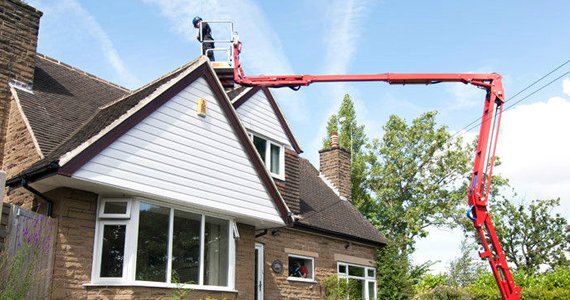
Tell us about your Nutley property — a Victorian or Edwardian plain clay tile cottage or villa on the Ashdown Forest plateau, an older tile-hung cottage, a post-war or 1960s–80s bungalow, or a property with trees close to the roof line. Price confirmed from £195 by phone immediately. No forms, no waiting.
Our specialist assesses every element relevant to Nutley’s conditions. Plain clay tile stock: ridge and hip mortar cohesion assessed against plateau exposure, tile condition and nail-sickness, lead flashings at chimney stacks. Forest-proximity properties: valley gutters, flat roof sections, and lead flashings inspected specifically for debris accumulation and organic build-up effects. Post-war and 1960s–80s stock: concrete tile porosity testing, felt underlay via loft inspection.
Full written report with photographs, condition ratings, remaining lifespan estimates, and a prioritised costed action list. Older stock: ridge and hip mortar condition rated against Nutley’s exposure profile, lead flashing condition, correct lime mortar specification where relevant. Forest-proximity: debris accumulation effects on valley gutters and flashings assessed. 1960s–80s: porosity verdict and felt condition. Report within 48 hours.
Nutley is a High Weald village perched on the plateau at the northern edge of Ashdown Forest, at around 150 metres above sea level — one of the highest settlements in East Sussex. The church of St James the Less and Nutley Windmill, a c.1690 post mill and one of the oldest surviving windmills in Sussex, are the village’s defining landmarks. The TN22 postcode covers a wide area of the Weald including Uckfield, Maresfield, and Buxted. Wealden District Council is the planning authority. The village falls within the High Weald Area of Outstanding Natural Beauty.
The plateau elevation is a real and specific factor in assessing Nutley’s roofs. At 150 metres, Nutley sits above the shelter of the Weald ridgelines to the south and receives the prevailing south-westerlies with relatively little obstruction. The thermal cycling on the plateau — warm summer days giving way to cold nights, and winters that are noticeably colder and wetter than the sheltered Weald valleys below — accelerates the weathering of lime and cement mortar at ridges and hips. On a plain clay tile Victorian cottage in a sheltered Uckfield street, ridge mortar may last 20 to 25 years before requiring relaying. On an exposed south-west-facing slope in Nutley at this altitude, 12 to 15 years is a more realistic maintenance cycle. Our surveys rate ridge and hip mortar condition in the context of the property’s elevation and aspect, not just its age in calendar years.
The majority of Nutley’s housing stock is Victorian and Edwardian — cottages and villas built as the village grew through the late 19th and early 20th centuries, consistent with the wider High Weald building tradition of plain clay tile roofs and tile-hung elevations. These properties carry handmade or early machine-pressed plain clay tiles, original lead flashings at chimney stacks, lime mortar at ridges and verges, and in many cases tile-hanging on gable and first-floor elevations. Some older properties in the village have partial Horsham stone slate sections. The assessment questions for this stock are: ridge and hip mortar cohesion (probed, not just observed from below); tile condition and nail-sickness on older sections where original copper or wrought iron nails have corroded; lead flashing condition at chimney stacks; and on tile-hung elevations, the condition of the timber peg fixings behind the tile surface.
Ashdown Forest proximity creates a practical secondary factor for Nutley properties with trees close to the building line. The forest fringe environment deposits leaf matter, pine needles, and small twigs into valley gutters, flat roof sections, and against lead flashings at a significantly higher rate than open village properties. This organic debris, when wet, holds moisture against lead flashings and accelerates crevice corrosion at the flashing-mortar interface. It also blocks valley gutters during heavy rain, causing standing water that backs up under tile overlaps or flat roof upstands. Properties with overhanging trees or valley gutters running between rooflines need more frequent gutter clearance than the average, and our surveys identify where debris accumulation is already causing or is likely to cause premature flashing or mortar deterioration.
The post-war and 1960s to 1980s bungalows and modest detached houses that expanded the village through the latter 20th century carry concrete interlocking tile roofs now 40 to 65 years old. End-of-life tile porosity is the approaching risk for the older end of this range — the standard assessment requiring tile porosity testing and loft inspection of felt underlay and batten condition to establish whether re-roofing is imminent or several years away. On Nutley’s exposed plateau, ridge mortar and hip mortar on this concrete tile stock also tends to weather faster than equivalent properties in sheltered locations.
Nearby Areas: High Weald plain clay tile surveys across Maresfield and Danehill. Ashdown Forest fringe coverage at Forest Row. Wider TN22 surveys at Uckfield and Horsted Keynes.
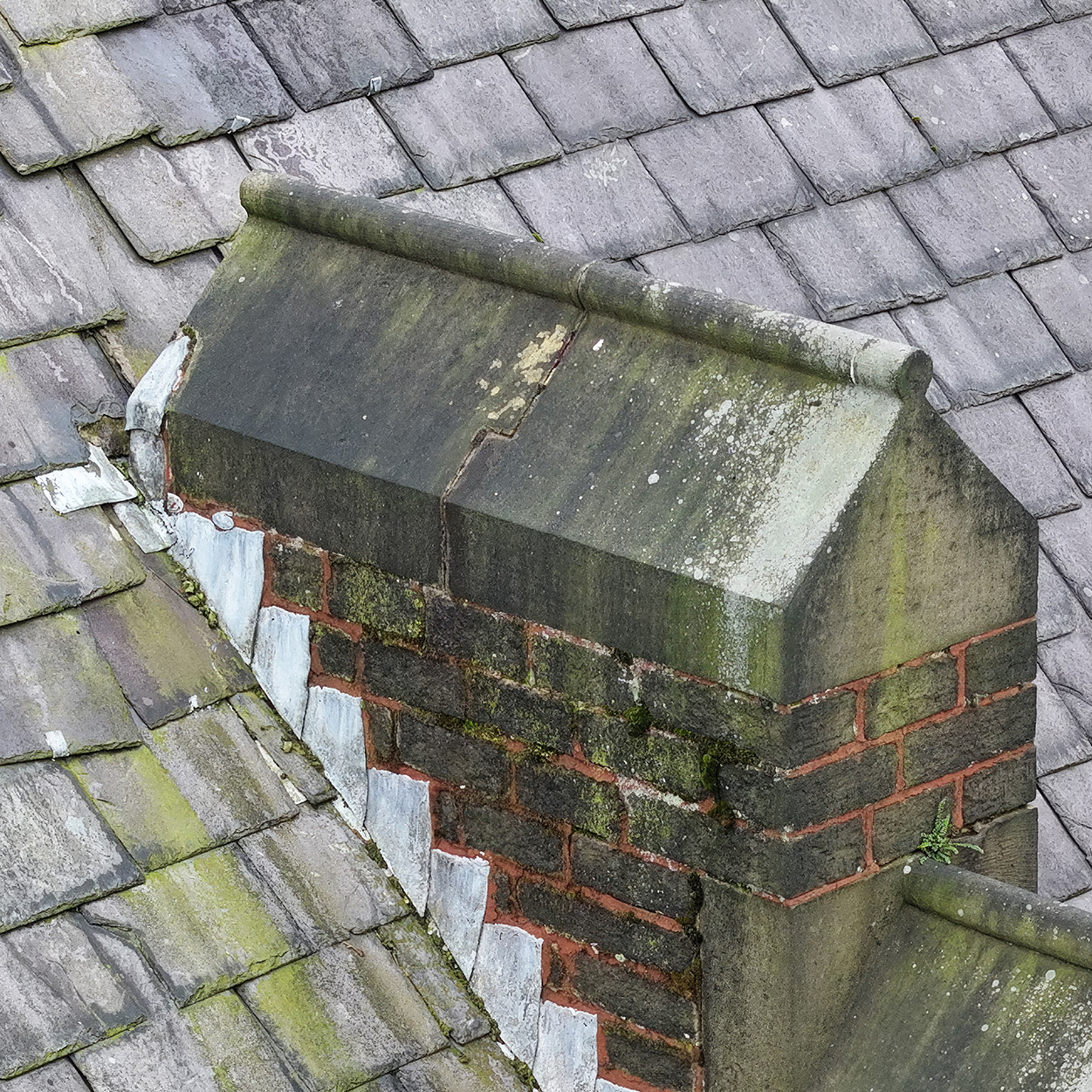


Nutley’s plateau elevation and Ashdown Forest setting create two specific and practical differences from surveys on properties in sheltered High Weald valleys: ridge and hip mortar longevity is measurably shorter on exposed plateau slopes, and forest-proximity properties carry higher debris accumulation loads on gutters and flashings. Assessing these correctly — not using valley-property assumptions for a village at 150 metres — is the difference between a maintenance schedule that fits the actual property and one that leaves the next ridge failure as a surprise.
A couple purchased a late-Victorian plain clay tile cottage on the western edge of Nutley for £480,000. The property had several mature oaks close to the north elevation, and the original plain clay tile roof with lead flashings at the chimney stack. The homebuyer survey noted “plain tile roof in fair condition. Ridge mortar showing weathering. Trees adjacent to north elevation — recommend periodic gutter maintenance. No immediate structural concerns.” No specialist survey was commissioned before exchange.
Year 1: The owners had the gutters cleared in autumn and noted some organic debris in the valley gutter between the main roof and a rear outshot. They also noticed that the chimney breast in the main bedroom felt slightly damp in wet weather but attributed it to the old chimney and assumed it was normal.
Year 2: A roofer attended to the chimney damp and repointed the chimney cap and the lead step flashings. Cost: £520. The damp improved but did not fully resolve. The roofer also noted the ridge mortar “will need attention in a few years.”
Year 3: The bedroom damp worsened during a wet autumn. A specialist assessment was commissioned. Findings: the chimney cap repointing had been done in Portland cement, which had cracked at the interface with the original lime mortar bedding above the lead flashing step, allowing water to track behind the flashing on thermal movement. This was addressed. More significantly, the valley gutter between the main roof and the rear outshot had accumulated a layer of compacted organic debris — leaf matter, moss, and decomposed oak leaf material — approximately 40mm deep along its full length. This debris layer was holding standing water in the gutter continuously, even in dry spells, and had saturated the lead gutter lining at its upstand edges. The lead at the lower upstand had lifted slightly from the wall mortar at two points, allowing water to track behind it and into the wall cavity. The north-facing ridge mortar was assessed as having lost cohesion throughout its depth on the upper section closest to the overhanging oaks — moss and lichen colonisation had accelerated mortar erosion significantly on this most sheltered and damp section of the roof. Programme: valley gutter clear, lead upstand re-dress and re-point in hydraulic lime, north ridge repointing in hydraulic lime (Portland cement ruled out explicitly given tile type), chimney cap relaid in hydraulic lime. Total: £2,800–£3,900.
What a Specialist Survey Before Purchase Would Have Found: “Victorian plain clay tile cottage, trees adjacent to north elevation and valley gutter. Valley gutter between main roof and rear outshot: debris accumulation already evident, gutter holding organic material — lead upstand condition requires close inspection. North ridge mortar: moss and lichen colonisation accelerating mortar erosion on this slope — cohesion assessment by probing indicates mortar will require relaying within 2–3 years. Lead step flashings at chimney stack: condition reasonable but repointing in Portland cement would risk cracking at the lime mortar interface — specify hydraulic lime only. Maintenance programme budget: £2,500–£4,000 over 2–3 years. Gutter clearance: minimum twice yearly due to tree proximity.”
Survey cost: from £195. The pre-purchase survey would have identified the valley gutter debris accumulation, the north ridge mortar condition, and the lime mortar specification requirement before exchange — giving the buyers an accurate maintenance programme rather than two years of ineffective single-point repairs.
Roof surveys for Nutley properties start from £195. Whether a Victorian plain clay tile cottage where the key questions are ridge mortar longevity on an exposed plateau slope and lead flashing condition at chimney stacks; a forest-edge property where valley gutter debris and lead upstand condition need specific assessment; or a 1970s bungalow approaching concrete tile end-of-life — call 07833 053 749 for an exact price confirmed immediately. Report within 48 hours.
On Nutley’s High Weald plateau, assuming valley-property maintenance cycles for ridge mortar leads to planning failures — mortar that should have been relaid becomes a water ingress problem because the exposure-adjusted timeline was not used. Independent specialist assessment gives you the correct maintenance schedule for the actual exposure conditions, not a generic answer from a surveyor who has assessed valley properties all week. No repairs sold — honest assessment only.
For Victorian or Edwardian plain clay tile properties on the Ashdown Forest plateau, the pre-purchase questions are: what is the actual cohesion of the ridge and hip mortar (probed, not observed from below); is there any evidence of Portland cement repair on old lime mortar and plain clay tile stock; what is the condition of lead flashings at chimney stacks; and for properties with trees close to the building line, what is the condition of valley gutters and flat roof sections where debris accumulation affects flashing longevity? These questions require specialist assessment, not a homebuyer survey observation from ground level.
Properties with overhanging trees or dense forest fringe planting close to the roof line need specific assessment of valley gutters, flat roof sections, and lead flashings in those positions. Organic debris compacted in a valley gutter does not drain between clearances — it holds moisture continuously against lead upstands. Specialist assessment establishes whether existing debris accumulation has already compromised flashing condition, and provides a realistic maintenance regime for the specific tree-proximity situation rather than a generic gutter-clearing recommendation.
On old Nutley plain clay tile properties, persistent damp that has not resolved after chimney repointing or flashing work is frequently caused by a combination of factors: Portland cement repointing cracking at the lime mortar interface, debris-related lead upstand failure in valley gutters, or ridge mortar loss on north-facing exposed slopes where lichen and moss colonisation accelerate erosion. Specialist assessment identifies which combination is operating and provides a coordinated specification.
If your Nutley cottage is 80–120 years old and you have not had ridge mortar assessed for 10–15 years, the combination of plateau exposure and age means the mortar is likely to be at or past its serviceable limit on the most exposed slopes. Our surveys assess cohesion by probing at multiple points across all slopes, distinguishing mortar that looks weathered but retains structural integrity from mortar that has lost cohesion entirely and is admitting water at ridge-tile voids. The distinction matters — the former can wait, the latter cannot.
Concrete tile roofs on the post-war bungalows and detached houses built as Nutley expanded are now 40–65 years old. Specialist assessment confirms whether tile porosity has reached end-of-life, whether felt underlay has been compromised, and what the realistic re-roofing window is — combined with assessment of whether the exposure at this altitude is accelerating ridge mortar deterioration ahead of the tile body itself.
Wealden District Council is the planning authority. A number of Nutley’s older cottages and farmhouses are listed. Listed building consent is required for works affecting the historic fabric. Our surveys provide the technical assessment evidence base for consent applications, including correct mortar specifications and an assessment of the condition of existing historic material.
Ridge mortar is exposed to freeze-thaw cycling at its upper surface — it is the highest point of the roof and the first surface to hold moisture and freeze in cold weather. At 150 metres on the Ashdown Forest plateau, the number of freeze-thaw cycles per winter is higher than in sheltered valley locations below 50 metres. Each cycle slightly expands cracks that have developed in the mortar surface, gradually widening them until water enters more freely, accelerating subsequent deterioration. The same mortar product in the same installation deteriorates faster at higher, more exposed elevations — this is why Nutley properties need ridge mortar attention on a shorter cycle than properties in the Uckfield or Maresfield valleys below the plateau.
Lead in valley gutters that has been under continuous organic debris load typically shows signs of crevice corrosion at the upstand edge where the lead meets the wall mortar — fine cracks or lifting at this joint are the visible indicator. In more advanced cases, a brown staining line appears on the wall surface behind the upstand. Our surveys inspect valley gutters and lead upstands specifically on forest-proximity properties, not just the valley gutter surface.
Roof surveys start from £195. Call 07833 053 749 for an exact price confirmed immediately — no forms, no waiting.
We cover Nutley and the full TN22 postcode including Maresfield, Uckfield, Buxted, Isfield, and surrounding High Weald plateau and valley villages. We also cover the adjacent TN6 (Crowborough) and RH18 (Forest Row) areas on the wider Ashdown Forest plateau.
For Victorian and Edwardian plain clay tile cottages, the answer depends on whether the existing bedding mortar is lime or early Portland cement. On properties where original lime mortar remains, matching in natural hydraulic lime is the correct specification — Portland cement repointing on lime mortar and plain clay tile creates a hard, inflexible interface that cracks under thermal movement and can damage tile faces through frost action. Our surveys specify the correct mortar composition, not just the repair required, so that any contractor instructed has a clear brief.
Completely. We survey only — no repairs sold, no contractor referrals. Our assessments reflect the actual condition of the property, not the work we would like to sell you.
Nutley attracts buyers seeking High Weald village character with Ashdown Forest on the doorstep — the combination of elevated open views, forest walks directly from the village, and the rural character of the High Weald plateau makes it a sought-after location within reasonable distance of Uckfield station and the A22. Victorian and Edwardian cottages and villas in the village range from £400,000 to £650,000; older and larger properties with more land from £600,000 to £900,000+; post-war bungalows and detached houses from £350,000 to £520,000.
For buyers of the Victorian and Edwardian stock, the property’s elevation and forest proximity are selling points that also translate into specific maintenance considerations that generic inspection misses. A homebuyer survey notes ridge mortar weathering and recommends periodic attention. A specialist survey establishes that the south-west ridge has lost cohesion and needs relaying this season, the north ridge has a further three to five years, and the valley gutter adjacent to the oak on the north elevation has accumulated debris sufficient to have lifted the lead upstand at two points. Those are actionable, costed findings — either a negotiating position before exchange or a maintenance plan for the first year of ownership.
Wealden District Council is the planning authority. The High Weald AONB designation and the listed status of a number of older Nutley properties mean that significant works require prior consent and technical evidence, for which specialist assessment reports are the standard submission.
Nutley village, Maresfield, Uckfield, Buxted, Isfield, Newick, and all surrounding High Weald and Weald villages throughout the TN22 postcode area
Maresfield • Uckfield • Forest Row • Danehill • Horsted Keynes
TN22 (Nutley, Uckfield, Maresfield, Buxted), TN6 (Crowborough, Rotherfield), RH18 (Forest Row), BN8 (Newick, Chailey)
Whether you’re buying a Victorian plain clay tile cottage on Nutley’s exposed Ashdown Forest plateau and need accurate ridge mortar and lead flashing condition before exchange; dealing with valley gutter damp that clearing the gutters has not resolved; concerned that your exposed south-west ridge mortar is on a shorter maintenance cycle than you expected; or assessing a 1970s bungalow’s concrete tile for end-of-life porosity — specialist assessment gives you the specific facts for your specific property and its specific conditions, not standard assumptions from a sheltered valley setting.
Call 07833 053 749 now. Price confirmed from £195 by phone immediately. Detailed written report with photographs, exposure-adjusted condition ratings, mortar specification, debris-effect assessment, and costed recommendations within 48 hours.
