
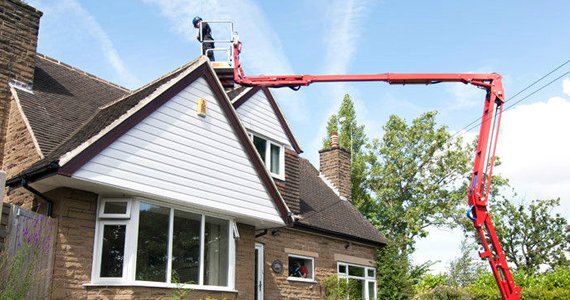
Tell us about your property — a tile-hung Wealden cottage, half-timbered farmhouse, Victorian terrace on the A21 corridor, or any TN19 address in Hurst Green, Etchingham, Stonegate, or the surrounding High Weald parishes. Fixed price from £195 confirmed by phone immediately. No forms, no waiting.
Our specialist inspects every element with the High Weald’s specific conditions in mind — handmade clay tile condition and pointing, lime mortar ridge and hip integrity, tile-hung wall and roof junction condition, extension roof junction integrity on Wadhurst Clay, all lead flashings and valley gutters, flat roof sections on outbuildings and extensions, and structural timber throughout accessible roof spaces.
Full written report with photographs, condition ratings, remaining lifespan estimates, and a prioritised action list with budget figures. For buyers: costed schedules against current Hurst Green values. For period property owners: traditional material specifications for conservation-area and listed building compliance. For landlords: portfolio-ready documentation with High Weald-specific maintenance priorities.
Hurst Green is a village in Rother District, East Sussex, sitting in the High Weald AONB on the A21 London–Hastings corridor between Robertsbridge and Flimwell. The surrounding area is one of the most historically significant landscapes in south-east England: it was the heartland of the Wealden iron industry, which from the 14th to 18th century used the dense oak woodland, abundant water power, and local ironstone to produce cannon and ironwork for the Crown and for export across Europe. The ironmasters’ wealth built the substantial farmhouses and estate properties still standing across the High Weald today. A mile to the south-east lies Etchingham, where the church of St Mary and St Nicholas — built in 1366–69 by Sir William de Etchyngham — is one of the finest 14th century churches in Sussex, retaining much of its original medieval stained glass.
Hurst Green’s housing stock reflects this landscape history. The village and surrounding parishes contain a high density of traditional Wealden vernacular buildings: half-timbered farmhouses and cottages, properties tile-hung on their external walls in the characteristic East Sussex manner, weatherboarded outbuildings, and roofs originally covered in handmade local clay tiles with lime mortar ridge and hip details. These sit alongside Victorian and Edwardian terraces built along the railway and A21 corridor, and more recent development. All of these property types require assessment that understands High Weald conditions — and in particular, the three failure patterns that the area’s geology and building tradition create.
Wadhurst Clay underlies much of the High Weald including the Hurst Green and Etchingham area. It is one of the most reactive clays in south-east England: its high shrink-swell coefficient means it absorbs water in wet periods and expands, then loses moisture in dry periods and contracts. The seasonal volume change is measurable — in a single year a clay-with-high-reactivity site can move centimetres vertically. For extensions, outbuildings, and any structure on a shallow foundation overlying Wadhurst Clay, this creates periodic foundation movement that progressively opens the roof junction between the extension and the main house wall.
The consequence is a recurring failure pattern seen throughout TN19: extension roof junction damp that returns every year regardless of how many mastic applications have been made. Mastic is torn open by the next seasonal movement cycle. Only correctly detailed lead step flashing designed to accommodate movement — allowing the two structures to shift relative to each other without breaking the waterproof seal — provides a permanent solution. Understanding that the problem is geological rather than simply a sealant failure changes the entire repair strategy.
For Hurst Green buyers: The combination of Wealden vernacular building complexity and Wadhurst Clay extension movement creates a category of risk that standard homebuyer surveys systematically miss. A £195 specialist survey before exchange quantifies the actual condition and costs — information that is essential at this stage and unavailable from any other source.
Nearby Areas: The same Wadhurst Clay geology and Wealden vernacular building tradition affects nearby Heathfield, Burwash, and Ticehurst.
A couple purchased a tile-hung cottage in the Hurst Green area for £520K. The property had an 18th century core with a Victorian rear extension, a later 20th century side extension, and a detached outbuilding. The homebuyer survey noted the roof was “in reasonable condition with some minor maintenance recommended.” No specialist survey was commissioned.
Year 1: Damp patch appears at the ceiling of the side extension after heavy autumn rain. A builder applies mastic along the junction between the extension roof and the main wall. The damp disappears through winter.
Year 2: The damp returns at the same location the following autumn, having re-opened through the summer dry period. A second mastic application is made. The lime ridge mortar on the main cottage begins dropping in sections along the north-facing hip — the Victorian extension has its original lime mortar, now over 130 years old.
Year 3: The extension junction damp re-appears for the third time. A structural engineer is consulted, who identifies Wadhurst Clay subsoil movement as the cause and confirms mastic is not a viable long-term solution. Investigation of the tile-hung gable wall reveals that the junction between the tile-hanging and the roof covering has opened at two points, creating a secondary water entry route invisible from inside. The outbuilding flat roof has also failed. Full remediation: lead step flashing with movement-accommodating detail at extension junction (£1,600), lime repointing of ridge and hips on main cottage (£2,400), tile-hung gable junction reflashing (£900), outbuilding flat roof replacement (£2,800). Total: £7,700. Plus three years of ineffective mastic applications that delayed the correct solution.
What a £195 Roof Survey Would Have Shown: “Side extension roof junction is mastic-sealed over Wadhurst Clay subsoil. Clay movement will re-open this junction seasonally — mastic is not a permanent solution. Lead step flashing with movement-accommodating detail required. Lime ridge and hip mortar on main cottage at end of life after 130+ freeze-thaw cycles — repointing within 2 years. Tile-hung gable wall junction showing early-stage opening at two points. Outbuilding flat roof perished. Budget £6,500–£8,500 for all remediation; extension junction and hip mortar are priorities.”
The Lesson: In Hurst Green’s High Weald properties, Wadhurst Clay extension movement and end-of-life lime mortar on 100+ year old buildings are the two dominant failure categories. Both are predictable and identifiable in a £195 specialist survey before purchase — and both compound into significantly higher costs when left until water damage makes them undeniable.


Surveying Hurst Green and the High Weald requires understanding the Wealden vernacular building tradition — tile-hanging, half-timbering, handmade clay tiles, lime mortar — and the specific failure modes these create in combination with Wadhurst Clay geology. We combine RICS-registered surveyor qualifications with hands-on knowledge of High Weald buildings and the East Sussex countryside construction tradition. This means your report addresses what your specific property actually needs.
For Hurst Green and High Weald properties valued at £400K–£700K+, a specialist roof survey from £195 costs a fraction of the compound remediation bills that arise when Wadhurst Clay extension movement, end-of-life lime mortar, and tile-hung junction failures are left unaddressed. We assess every element, identify the geological context for each junction, specify correct traditional materials for period buildings, and give you prioritised findings with costs. Survey from £195. Exact quote by phone immediately. Report within 48 hours.
Call 07833 053 749 now. No forms. No waiting.
The dominant recurring failure across the High Weald. Wadhurst Clay is one of south-east England’s most reactive geological deposits — it swells in wet weather and contracts in dry periods, creating measurable seasonal foundation movement beneath any structure on a shallow foundation. Extensions on Wadhurst Clay sites experience this movement every year, progressively opening mastic seals at the junction with the main house.
Mastic repairs at these junctions fail repeatedly — typically within one seasonal cycle — because the material cannot accommodate movement. The correct repair is lead step flashing with a movement-accommodating detail that allows the two structures to shift relative to each other without breaking the waterproof seal. Survey from £195 identifies the subsoil at each junction and specifies the appropriate repair approach.
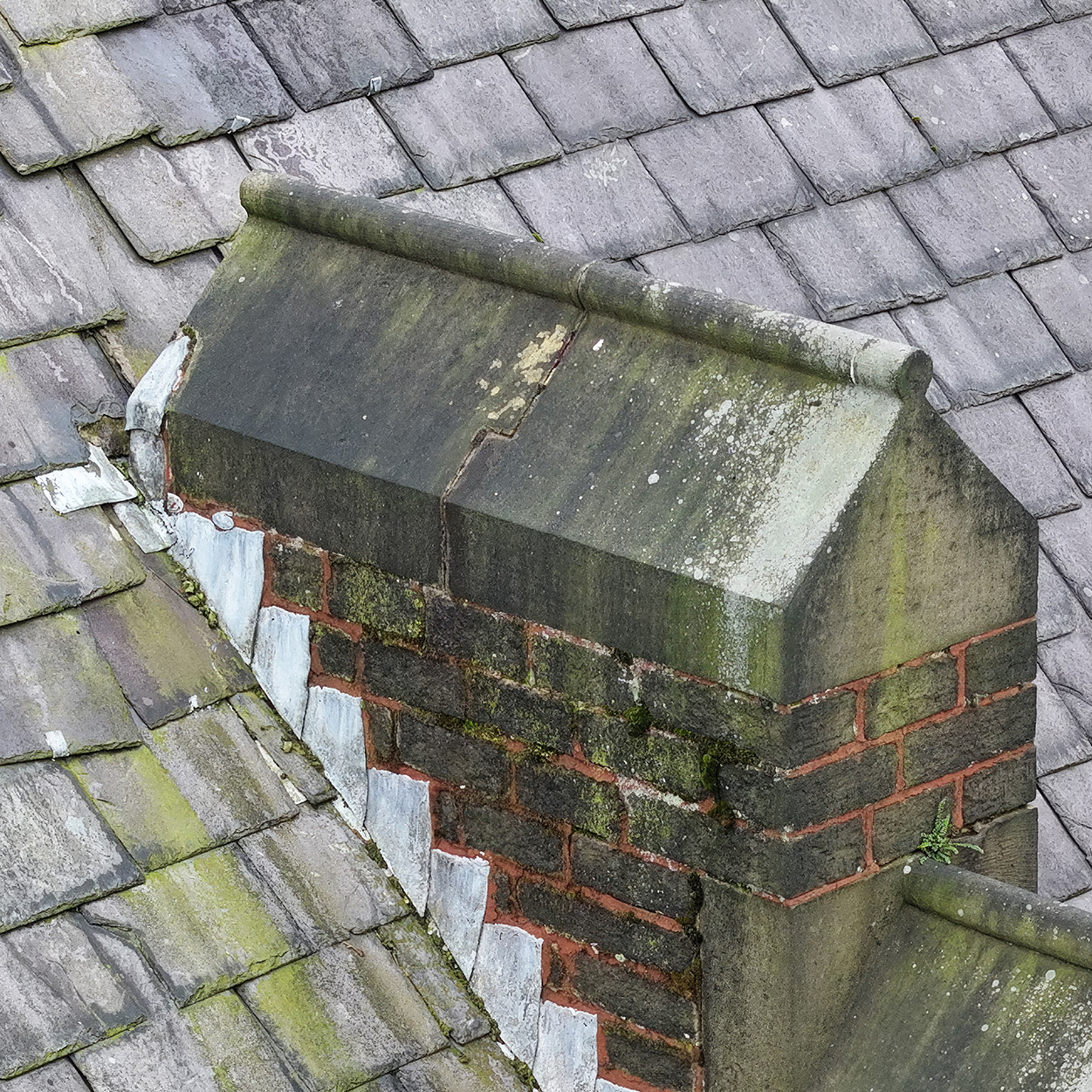
The traditional Wealden vernacular buildings of Hurst Green and surrounding parishes were roofed in handmade local clay tiles bedded on timber lath, with lime mortar ridge and hip details. These buildings are now 100–200 years old, meaning the original ridge and hip mortar has typically experienced well over 100 freeze-thaw cycles. The High Weald’s higher rainfall and exposed ridge positions accelerate mortar deterioration; north and west-facing ridges are typically most advanced in their failure.
Where lime mortar has been replaced with cement during 20th century maintenance, the harder cement cracks through thermal movement and creates discrete failure points rather than the gradual softening of lime. Assessment from £195 identifies mortar type and extent of deterioration, distinguishing lime (gradual replacement needed) from cement (cracking and discrete repair needed) across all ridge and hip runs.
Tile-hanging is a defining characteristic of East Sussex vernacular architecture — external walls are clad in overlapping clay tiles from eaves level down, providing weatherproofing and visual character. Where tile-hung walls meet the roof line — particularly at gable ends and the junction between a tile-hung wall face and an adjacent roof pitch — the detail creates a systematic weak point that standard surveys routinely miss or misidentify as a generic flashing issue.
The correct treatment depends on whether the junction uses a lead soaker detail, a mortar fillet, or simply relies on the tile overlap, and on the specific failure mode present. Assessment from £195 photographs every tile-hung junction and specifies the appropriate repair for each, distinguishing between early-stage opening (preventive reflashing) and active water ingress (immediate repair needed).
We assess all roof coverings (clay tile, slate, flat sections), ridge and hip mortar type and condition, tile-hung wall junctions, all lead flashings and valley gutters, extension roof junctions with subsoil type noted, outbuilding roofs, chimney stacks, and structural timber in roof spaces where accessible. Every element gets a condition rating, remaining lifespan estimate, and priority ranking with budget figures.
Yes. Hurst Green sits within the High Weald AONB, and many surrounding properties are listed buildings or within conservation areas. Repairs to listed buildings require listed building consent and must use traditional materials — handmade clay tiles matched to the originals, lime mortar, natural slate. Our surveys note all designations and specify compliant repair approaches, saving the cost and disruption of non-compliant work being refused or required to be reversed.
Most Hurst Green surveys take 2–3 hours. Properties with complex roof geometry, multiple extensions, or converted farm buildings may require longer. Detailed written report with photographs delivered within 48 hours.
We cover the full TN19 postcode area including Hurst Green, Etchingham, Stonegate, and the surrounding High Weald parishes. Also serving TN32 (Robertsbridge, Bodiam), TN21 (Heathfield), and TN5 (Ticehurst, Wadhurst). For Burwash and Brightling see our Burwash page.
Hurst Green sits in the High Weald — a landscape shaped by seven centuries of iron-making that used the dense Wealden oak, the abundant water power of the clay-valley streams, and local ironstone deposits to produce cannon, anchors, and ironwork from the 14th century until the industry migrated north with the Industrial Revolution. The ironmasters’ wealth is preserved in the substantial farmhouses and estate properties that define the High Weald today, and which now attract buyers seeking rural character within commuting distance of London via the Etchingham and Stonegate railway stations on the Hastings line.
Hurst Green and the TN19 area offers good value by East Sussex standards, with period cottages and farmhouses typically ranging from £400K for smaller properties to £700K and above for larger farmhouse conversions with land. At these values the investment in a £195 specialist survey before exchange is straightforward, particularly given the specific risk profile of High Weald properties: Wadhurst Clay extension movement that standard surveys miss, 100–150 year old lime mortar ridge details on the original building stock, and tile-hung wall junctions that require specialist knowledge to assess correctly. Each of these can represent a £2,000–£5,000 repair bill that is entirely predictable and negotiable before exchange — but invisible without specialist access.
Hurst Green village, Etchingham, Stonegate, Silverhill, and surrounding High Weald parishes and hamlets within TN19
Heathfield, Ticehurst, Robertsbridge, Horam, Burwash
TN19 (Hurst Green, Etchingham, Stonegate), TN32 (Robertsbridge, Bodiam area), TN5 (Ticehurst, Wadhurst border)
Whether you are buying a Wealden cottage near Etchingham, own a tile-hung farmhouse in the High Weald, have a Victorian terrace on the A21 with extension junction damp, or simply want to understand what your roof actually needs — a specialist roof survey Hurst Green from £195 is essential. Wadhurst Clay extension movement, end-of-life lime mortar, and tile-hung junction failures are invisible in standard surveys and expensive when left until water damage makes them unavoidable.
Call 07833 053 749 now. Roof survey Hurst Green from £195. Detailed report within 48 hours.
