
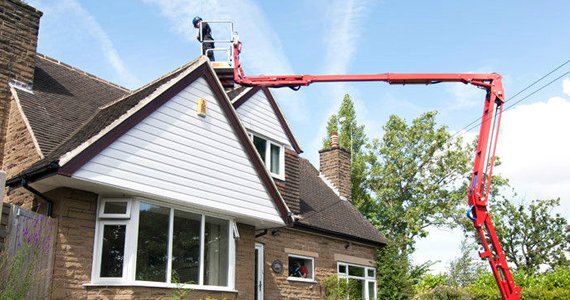
Tell us about your property — Victorian High Weald cottage, inter-war rural semi, Ashdown Forest edge farmhouse, or modern Maresfield parish dwelling. Fixed price from £195 confirmed by phone. No forms, no waiting, no vague estimates.
Our specialist inspects every element with Horney Common’s specific geology in mind — Ashdown Beds sandstone chimney condition, frost-spalling on stone details, Wadhurst Clay shrink-swell effects on extension junctions, tile and slate covering condition, ridge and hip mortar, all lead flashings, flat roof sections, and gutter condition throughout.
Full written report with photographs, condition ratings, remaining lifespan estimates, and a prioritised action list with budget figures. For buyers: costed schedules at High Weald property values. For landlords: portfolio-ready documentation. For owners: clear timelines, not vague “monitor” advice.
Horney Common is a small hamlet within Maresfield civil parish, sitting on the southern fringe of Ashdown Forest in the Wealden District of East Sussex. The broader parish — which includes Maresfield village, Nutley, Fairwarp, and Duddleswell alongside Horney Common — is defined by its position on the High Weald, the ancient forested sandstone ridge that once formed the most densely wooded area in England. Ashdown Forest itself began as a Norman deer hunting reserve under the de Aquila family in the late 11th century and became a Crown forest under the Plantagenets. Maresfield’s church dates from around 1100; the Grade II* listed Chequers Inn at the heart of the parish from the 17th century.
The area’s identity was shaped for centuries by the Wealden iron industry. The geology of the High Weald — iron-rich Wadhurst Clay and Ashdown Beds sandstone — provided both the ore and the building stone, while the dense woodland provided charcoal fuel and the fast-running stream valleys provided water power for bellows and hammer forges. Within two miles of Maresfield church in the 16th century stood five iron furnaces: Oldlands, Hendall, Old Forge, Lower Marshalls and Maresfield. Ralph Hogge, who cast the first iron cannon in England at nearby Buxted in 1543, drew his materials from across this southern forest edge. The hammer ponds built to power these forges — damming the small stream valleys into which the High Weald sandstone has been incised — are still visible in the landscape today. Maresfield Park House was owned successively by the Shelley family and Count Alexander Münster of Hanover; the estate was confiscated by the Crown in 1914 and broken up for housing plots in 1924.
1. Ashdown Beds sandstone chimney frost-spalling. Horney Common and the wider Maresfield parish sit on Ashdown Beds — a fine-grained, porous sandstone that was widely used as building stone throughout the High Weald from medieval times through the 19th century. Unlike clay brick, Ashdown sandstone absorbs moisture readily. In a wet, high-rainfall High Weald climate, saturated sandstone chimneys and stone quoins go through repeated freeze-thaw cycles each winter: water expands on freezing, fracturing the outer face of the stone in a process called spalling. From ground level this looks like surface erosion, but the mortar joints behind the spalled face are failing progressively. A chimney that has lost 15mm of face material may look intact from below while the top sections are structurally compromised. Lime-based repointing has often been replaced with hard cement on these chimneys — which traps moisture inside the stone rather than allowing it to breathe, accelerating the problem.
2. Wadhurst Clay shrink-swell on extension junctions. Beneath the Ashdown Beds sandstone of the higher ground, the Wadhurst Clay formation is encountered, particularly in the valley bottoms and lower slopes around the hamlet. Wadhurst Clay is highly reactive: it swells significantly in wet winters and shrinks back in dry summers. Properties with Victorian or later extensions built partly on Ashdown sandstone and partly on Wadhurst Clay experience differential movement between the original structure and the extension. The junction between them — whether flashed with lead or sealed with mastic — opens and re-seals with each seasonal cycle. After 30–50 years of this, the junction fails permanently. This is the single most common repair identified on Maresfield parish properties and the one most consistently described as “minor” by homebuyer surveys that don’t understand the geology driving it.
3. High Weald vernacular ridge and tile mortar failure. The older housing stock of Horney Common — 19th-century High Weald vernacular cottages and farmhouses, many originally built with local handmade tile or Horsham stone slab roofing — is now 100–150 years old. Ridge tiles bedded in lime mortar have gone through 100+ freeze-thaw cycles; hip mortar on steeply pitched vernacular roofs cracks and lifts. On the higher ground around Ashdown Forest, wind exposure is greater than in the sheltered Weald valleys, accelerating mortar weathering on north and west-facing slopes. These are gradual failures — visible from a ladder but rarely from the ground — that become emergency repairs after a storm dislodges a weakened section.
Nearby Areas: We also cover Hartfield, Heathfield, Hailsham, and Uckfield.
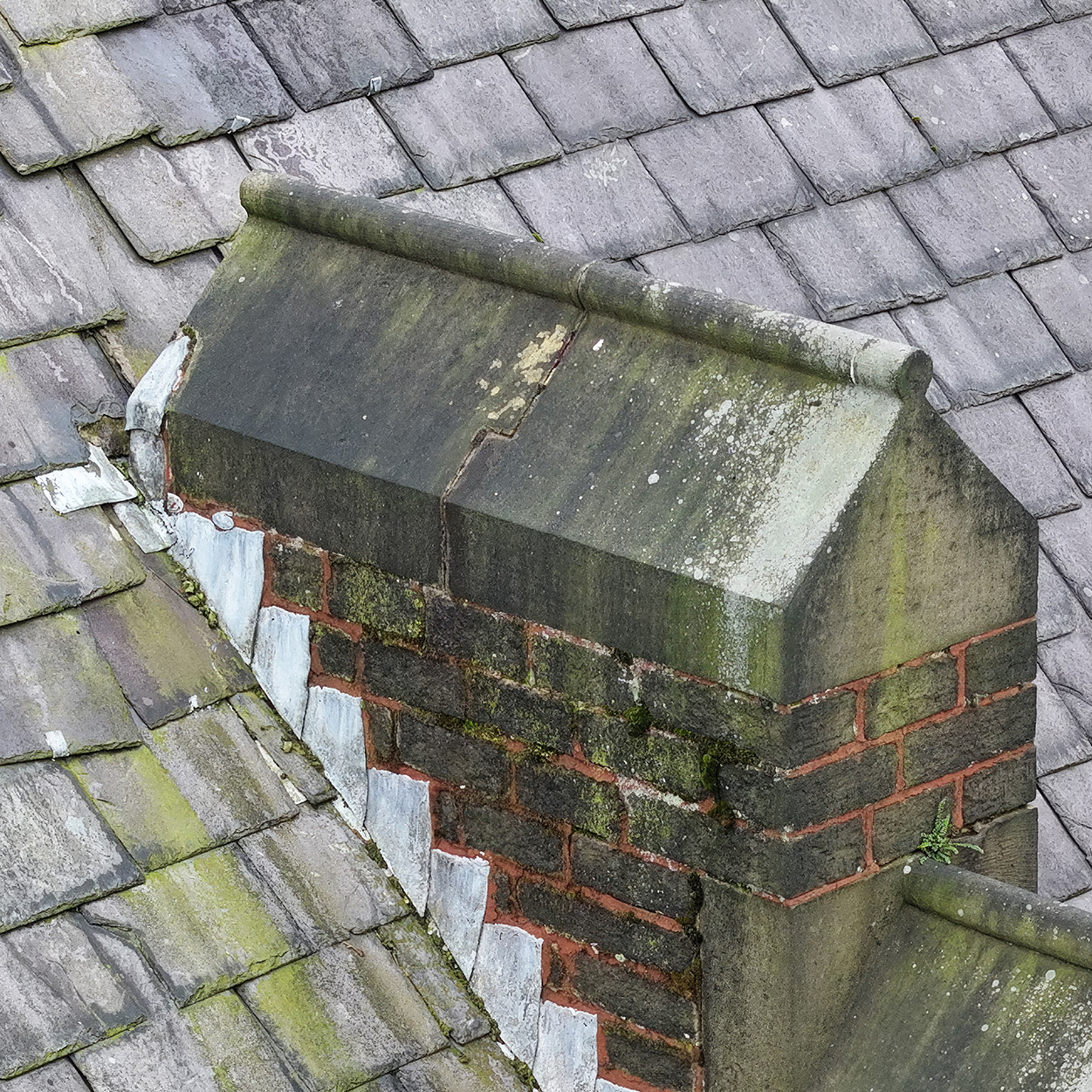
A couple purchased a 19th-century High Weald cottage in the Horney Common area for £490,000. Local sandstone chimney stack, steeply-pitched clay tile roof, a 1970s single-storey extension to the rear. The homebuyer survey noted “chimney stack showing some weathering, repointing recommended, extension junction to be monitored.” No specialist roof survey was commissioned.
Year 1 (autumn): Damp patch develops in the ceiling of the rear bedroom directly below the junction between the original cottage and the 1970s extension. Builder applies mastic externally. Cost: £240. The following summer it appears to have resolved.
Year 2: Junction damp returns after the first October rains. A local roofer reseals the junction and replaces two hip tiles that have slipped on the rear slope. Cost: £580. He notices the chimney “looks a bit rough” but doesn’t elaborate.
Year 3: Full investigation reveals four simultaneous failures: the extension junction has no lead step flashing — it was sealed throughout with mastic that has now failed along its entire length; the sandstone chimney has lost 18mm of face material on the north and west faces and the top courses are structurally soft; the hip mortar on the rear and north slopes has failed across approximately 60% of its length; and the 1970s extension flat roof felt has perished and is allowing slow water ingress into the timber joists. Total remediation: lead step flashing to extension junction, chimney repoint and structural stabilisation of top courses, hip re-bed, flat roof replacement — £11,500–£15,000.
What a £195 Roof Survey Before Purchase Would Have Shown: “Sandstone chimney: 18mm face spalling on north/west faces, mortar fully eroded top two courses, structural softness evident — repoint with breathable lime mortar and stabilise top courses, budget £2,800–£3,500. Extension junction: no lead flashing present, mastic-only seal failing — remove and install lead step flashing, budget £1,200–£1,800 urgent. Hip mortar: 60% failure rear and north slopes — full re-bed, budget £1,800–£2,400 within 12 months. Extension flat roof: felt perished, joists showing early moisture uptake — full replacement required, budget £4,000–£5,500.”
The Pattern on High Weald Properties: Ashdown Beds sandstone chimneys erode quietly over decades. Wadhurst Clay moves beneath extensions every winter. Hip mortar on steeply-pitched vernacular roofs cracks and lifts unnoticed. Flat roof extensions age to failure. These four processes run independently and simultaneously — and a £195 specialist survey identifies all of them before you sign.


Professional roof surveys in the High Weald require understanding that Ashdown Beds sandstone behaves completely differently from clay brick: it is porous, frost-susceptible, and incompatible with cement-based mortars that trap moisture. They require knowledge of Wadhurst Clay’s shrink-swell behaviour and why the junctions it drives open every winter cannot be fixed permanently with mastic. And they require familiarity with High Weald vernacular construction — steeply pitched roofs, handmade clay tiles, occasional Horsham stone slabs, lime mortar details — and what normal age looks like versus where the critical failure points are. We combine RICS-registered qualifications with specialist knowledge of High Weald geology and the specific failure patterns it produces on properties in and around Horney Common.
From Victorian High Weald vernacular cottages at Horney Common to inter-war rural semis at Maresfield to period farmhouses on the Ashdown Forest edge, professional roof survey from £195 provides sandstone-aware, clay-geology-informed, High Weald-specialist assessment. We assess chimney stone condition, extension junction flashing integrity, ridge and hip mortar, tile covering lifespan, and the compound failure patterns that porous-stone ground conditions produce on properties in this area.
Exact quotes from £195 when you call. No surprises. Most residential surveys from £195. Call 07833 053 749 immediately for availability.
Ashdown Beds sandstone is porous and frost-susceptible. Saturated stone spalls (fractures) on the surface during freeze-thaw cycles, losing face material year on year. The problem is compounded by cement repointing — hard cement traps moisture inside the stone rather than allowing it to breathe, accelerating spalling behind the mortar face. Only lime mortar is appropriate for repointing sandstone.
Wadhurst Clay beneath extensions shrinks and swells with the seasons — enough movement to open a mastic-sealed junction by several millimetres every year. Mastic re-sealing is a temporary fix that repeats indefinitely. The permanent solution is a properly installed lead step flashing that can accommodate the movement without failing.
From £195. Call 07833 053 749 for an immediate fixed price.
Horney Common and the wider Maresfield parish sit within or immediately adjacent to the High Weald Area of Outstanding Natural Beauty. This means planning permission is required for significant external alterations to roof covering materials on many properties, and any repairs should respect the character of the original vernacular construction. Our surveys note planning-relevant conditions where relevant.
Yes — we cover Horney Common, Maresfield village, Nutley, Fairwarp, Duddleswell and the surrounding Wealden District hamlets in TN22, as well as neighbouring postcodes including Uckfield (TN22), Buxted (TN22), Forest Row (RH18) and Danehill (RH17).
We aim to survey within 5–7 working days of booking. Written report delivered within 48 hours of survey. Call 07833 053 749 to confirm availability.
Horney Common and the surrounding Maresfield parish occupy some of the most distinctive landscape in East Sussex — the southern fringe of Ashdown Forest, within the High Weald AONB, with the forest’s open heathland and ancient woodland to the north and the gentle agricultural Weald to the south. Properties range from period farmhouses and converted oast houses on large plots to Victorian and Edwardian village housing in Maresfield and Nutley, with more recent rural development filling gaps across the parish. Values for detached period properties in this area regularly reach £500K–£900K, with premium farmhouses and forest-edge properties exceeding £1M.
The housing stock reflects the area’s agricultural and industrial past. The Maresfield Park estate, broken up for housing after 1924, produced a generation of detached houses around the village. Military use during both World Wars left marks on the local fabric. Throughout the parish, the dominant construction material for older buildings is the local Ashdown Beds sandstone — used in chimneys, quoins, window surrounds and sometimes entire wall construction — alongside traditional handmade clay tile roofing. Both require specialist understanding that general property surveys do not provide.
Horney Common, Maresfield village, Nutley, Fairwarp, Duddleswell
Uckfield, Buxted, Five Ash Down, Danehill, Chelwood Gate, Forest Row (RH18), Hartfield (TN7), Crowborough (TN6)
Whether you own a period cottage at Horney Common, are buying a Victorian farmhouse in Maresfield parish, or manage rural rentals across the High Weald, professional roof survey from £195 reveals how Ashdown Beds sandstone is eroding in the chimneys, how Wadhurst Clay is moving beneath extension junctions, and whether lime-mortared vernacular details have reached the point where deferred maintenance becomes compound failure. Understanding all three simultaneously — before you commit or before a storm accelerates the process — is worth every penny.
Call 07833 053 749 now. Roof survey Horney Common from £195. Report within 48 hours.
