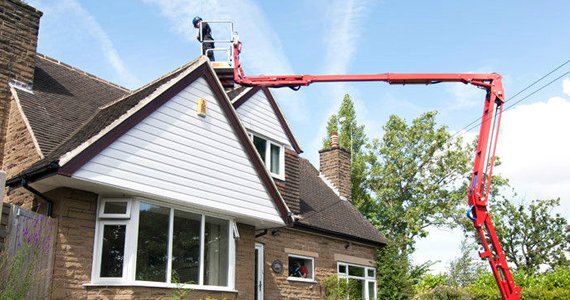
Tell us about your property — tile-hung cottage on the High Street, Victorian house near the station, Arts and Crafts house on the Hindhead or Grayswood roads, rural property on the Blackdown or Marley Common lanes, or modern home in Shottermill. Fixed price from £195 immediately over the phone. No forms, no waiting.
Our specialist assesses every element with Surrey Hills conditions in mind — clay plain tile condition on both roof slopes and tile-hung wall panels, Arts and Crafts decorative ridge and hip tiles, greensand chimney weathering, lead flashings, complex multi-pitch roofline junctions, biological growth on shaded north-facing slopes, gutter and downpipe condition, and flat roof sections over Victorian rear additions.
Full written report with photographs, condition ratings for every element, remaining lifespan estimates, and a prioritised maintenance plan with budget figures. Conservation area material specifications where relevant. Clear guidance on traditional material replacements appropriate to Haslemere’s vernacular character and any listed building requirements.
Haslemere is the most southerly town in Surrey, a market town of around 12,000 people nestled between the wooded Greensand hills at the point where Surrey, Hampshire and West Sussex meet. The name derives from hazel trees beside a mere — the first record dates to 1221, and the town was granted its market charter in 1393. Queen Elizabeth I granted the right to elect two MPs. Today Haslemere sits between the Surrey Hills National Landscape to the north and the South Downs National Park to the south, with Blackdown (919ft/280m) rising directly to the south-east and the National Trust’s Hindhead Commons and Devil’s Punch Bowl to the north. London Waterloo is 49–56 minutes by train — the railway arrived in 1859 and immediately transformed the town’s character.
The railway triggered two overlapping building booms that together created Haslemere’s exceptional architectural stock. First came prosperous Victorian London commuters building solid brick and tile-hung villas from the 1860s onward. Then, from the 1880s to the 1910s, came the Arts and Crafts movement: writers, artists and academics — Tennyson on Blackdown, George Bernard Shaw at Hindhead, Arthur Conan Doyle at Undershaw, Helen Allingham painting the town’s tile-hung cottages — attracted by the high Surrey Hills air and landscape. Their houses, and those built by craftsmen inspired by the movement, represent some of the finest domestic architecture of the period in south-east England. A roof survey Haslemere assessment from £195 understands all three eras: medieval and Tudor, Victorian, and Arts and Crafts.
Half Moon House on the High Street — Grade II listed, 15th century, tile-hung cladding to its walls, clay tile roof, tall brick chimneys — is emblematic of the vernacular tradition that defines this town. Tile-hanging in local clay plain tiles is not merely decorative here: it is the traditional weather protection system for timber-framed buildings on the Greensand, where locally sourced Horsham-area sandstone was too soft and porous to provide reliable wall construction without protection. The result is a town where clay plain tiles appear on both roofs and walls, age at different rates depending on aspect and shade, and require specialist assessment to distinguish acceptable weathering from active failure requiring intervention.
The Arts and Crafts houses add a further layer of complexity: complex multi-pitch rooflines designed for aesthetic effect rather than simplicity of maintenance, decorative terracotta and clay ridge tiles that are now 100–130 years old, stone and brick chimneys with multiple flues, and deep eaves designed to create shelter but which also trap moisture and conceal rafter end decay. Standard surveying from the ground — as delivered by general homebuyer surveys — cannot assess these properties adequately.
For homeowners: A £195 specialist survey identifies whether your clay plain tiles are simply weathered or actively failing at their nibs, whether your Arts and Crafts decorative ridge sections need professional repointing or replacement, and whether your greensand chimney stack is developing the frost-spalling that lets water into the roof void.
For buyers: Before committing £700K–£3M+ on a Haslemere property, a £195 survey reveals how Surrey Hills weather, decades of tile-hung material ageing, and the specific challenges of Arts and Crafts rooflines have affected the property — detail that no general survey delivers.
Nearby Areas: We also cover Hindhead, Grayswood, Godalming, Farnham, and Midhurst.
Haslemere’s extraordinary range of building types — from 15th-century tile-hung High Street cottages to complex Arts and Crafts houses on the Hindhead and Grayswood roads — demands specialist knowledge that general surveyors simply cannot provide. We combine formal surveying qualifications with direct knowledge of clay plain tile ageing patterns, greensand material behaviour, Arts and Crafts roofline complexity, and the specific moisture environment created by Surrey Hills tree cover on north-facing slopes.
A family purchased a five-bedroom Arts and Crafts house on a quiet lane between Haslemere and Hindhead for £1.35M. The property dated from approximately 1903 — tile-hung upper storey, multi-pitch roof with decorative clay ridge tiles, two substantial brick-and-stone chimney stacks, and a glazed verandah running along the south elevation. The homebuyer’s survey described the roof as “of appropriate age with evidence of maintenance — further investigation recommended for the chimney stacks.” The buyers commissioned a chimney-only inspection. Chimney mortar was repointed at a cost of £1,400. They completed the purchase.
The following spring: A wet patch appears in the main bedroom, on the ceiling beneath the most complex section of the roof — the junction between the main ridge and a subsidiary catslide roof over the rear single-storey extension. A roofer investigates and replaces three broken hip tiles. The wet patch dries out in summer.
Autumn of year two: The wet patch returns in a slightly different position. A second roofer investigates, replaces two more tiles, and applies a sealant to the hip tile mortar. Cost: £850. During this visit he notices that the valley between the catslide and the main roof body has a lead lining that appears to have been hand-dressed in sections — “old work, probably original, but seems to be holding.”
February of year three: Three weeks of frost are followed by a thaw. The wet patch in the bedroom becomes a significant active leak. Emergency investigation reveals a cascade of interconnected problems that had been developing simultaneously: the lead-lined valley between the catslide roof and the main roof body had two hairline cracks, each less than 20mm, in the original hand-dressed lead — invisible except to close inspection from above; the clay plain tiles on the north-facing catslide slope had lost their fixing nib integrity on roughly 35% of the field, meaning those tiles were resting by weight only and had shifted slightly over winter; the decorative Arts and Crafts ridge tiles along the catslide ridge had open joints at three locations, allowing frost-driven water into the roof void; and the timber wall plate at the foot of the catslide, concealed behind the fascia, showed active rot where moisture had been feeding into it for several winters. Remediation: replace catslide tile field with matching handmade plain tiles, strip and re-dress lead valley with Code 5 lead, replace ridge sections, treat and sister-board the wall plate. Cost estimate: £22,000–£28,000.
What a Roof Survey Haslemere Specialist Would Have Identified at Purchase: “North-facing catslide roof over rear extension: clay plain tile field shows nib corrosion on approximately one-third of visible tiles — tiles resting by weight only. Arts and Crafts decorative ridge sections show open mortar joints at three locations; requires repointing or sectional replacement. Lead valley between catslide and main roof body: original hand-dressed lead showing stress deformation consistent with thermal cycling over 100+ years; recommend strip and reline in Code 5 lead. Wall plate condition cannot be assessed without opening; budget allowance recommended. Advised pre-exchange price reduction of £18,000–£25,000 or retention of equivalent sum for immediate post-purchase remediation.”
The Arts and Crafts Roofline Pattern: These houses were designed by architects for visual effect. They are beautiful. They also create maintenance complexity that standard surveys — and many roofers who visit piecemeal — systematically fail to assess as an interconnected whole. A £195 specialist survey looks at the complete roof system together, not tile by tile.
Haslemere roof surveys start from £195. For properties valued between £500K and £3M+, a specialist survey costs less than a single emergency call-out — and identifies problems before they become emergencies. We assess tile-hung roofs and walls, Arts and Crafts rooflines, Victorian plain tile fields, greensand chimney stacks, and lead valley systems with specific expertise in each.
Call 07833 053 749 for an exact quote immediately over the phone. No ranges, no vague estimates. Most standard residential surveys from £195, with detailed written report and photographs within 48 hours. Conservation area and listed building material guidance addressed as standard for Haslemere High Street properties. Same-day service often available across GU27.
For buyers: our reports provide the specific, costed detail to support price negotiation at £700K–£3M+ — all for £195.
Standard homebuyer surveys cannot assess Arts and Crafts rooflines, tile-hung vernacular properties, or Victorian plain tile fields adequately from ground level. Before committing to a GU27 purchase at £700K–£3M+, a £195 specialist survey delivers the roof-specific intelligence to negotiate from a position of knowledge — or to budget accurately for post-purchase work.
Persistent damp in Haslemere properties is frequently misdiagnosed because the multi-pitch rooflines of Arts and Crafts and Victorian houses create multiple potential entry points. A roofer addressing one tile at a time may never identify the actual failure — often a lead valley crack, a failed tile nib field on a north-facing slope, or an open Arts and Crafts ridge joint. A whole-system survey identifies root causes rather than symptoms.
Houses of this age and complexity are now 100–130 years old. Original lead valleys, clay plain tile fields, decorative ridge sections, and deep eave structures were built to last — but not indefinitely. Many are at or approaching their maintenance threshold simultaneously. A survey that assesses all elements together gives you a planned maintenance programme rather than a series of reactive surprises.
Haslemere’s town centre includes Grade II listed properties requiring traditional materials — handmade clay plain tiles, natural slate, lime mortar — for any visible repair work. Our surveys identify what is needed and specify conservation-compatible approaches that will satisfy listed building consent requirements and preserve the architectural character the listing protects.
Before adding a dormer, rear extension, or carrying out significant internal renovation to a Victorian or Arts and Crafts property, understanding the existing roof’s condition is essential. Hidden structural complexities — historic repairs, non-standard rafter layouts, previous alterations — must be understood before any new work begins. A survey before the contractor arrives prevents expensive mid-project discoveries.
Surrey Hills weather — notably the south-westerly rain driven against west-facing slopes by Blackdown and the Greensand hills — means Haslemere properties experience higher wind-driven rain loading on their south-west elevations than equivalent properties on lower, more sheltered ground. Knowing your roof’s current condition allows planned maintenance at sensible cost rather than crisis repair.
Tile-hanging is the traditional Surrey vernacular practice of covering timber-framed wall surfaces with clay plain tiles, hung on battens in the same manner as roof tiles but at a lower pitch. Half Moon House on the High Street — Grade II listed, 15th century — shows the original system. The tiles on the walls age and fail in similar ways to roof tiles: nib corrosion causes tiles to slip, biological growth on north-facing or shaded panels retains moisture, and poorly repointed sections allow water ingress into the timber frame behind. A survey that assesses only the roof covering misses half the building envelope — and the timber frame damage that results from undetected wall tile failure can be far more expensive than roof tile replacement.
The architects of Haslemere’s late Victorian and Edwardian Arts and Crafts houses — working in the tradition of Philip Webb, Norman Shaw, and Edwin Lutyens — designed rooflines for visual complexity: multiple pitches, catslide extensions, decorative ridge treatments, deep eaves, gabled dormers, and elaborate chimney stacks with multiple flues. Each junction between roof sections is a potential failure point — a lead valley, a flashing detail, a change of tile material. These properties have as many as six or eight separate roof planes, each with its own maintenance requirements, compared to one or two on a standard Victorian terrace. A general survey treats them as a single roof. A specialist survey assesses each plane and each junction individually.
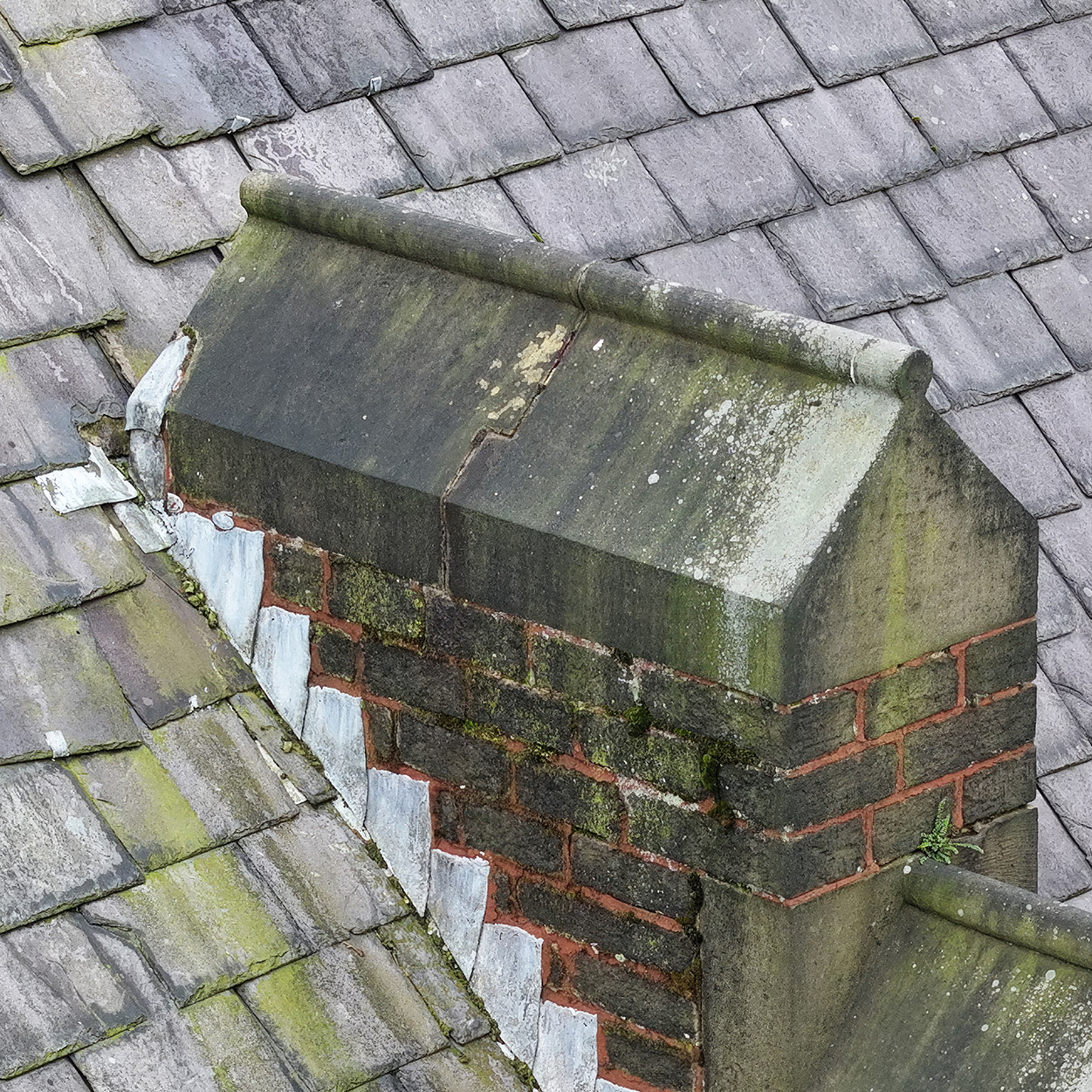
Haslemere sits on the Greensand Ridge — a band of porous, acidic sandstone that was the primary local building stone before Victorian brick arrived. Greensand is water-absorbent: it soaks up rainfall readily. When that absorbed water freezes, it expands within the stone matrix and progressively spalls the surface. Chimney stacks and garden walls built in greensand show this characteristic “sugaring” erosion after enough frost cycles. Once the stone surface begins to spall, the mortar joints open, water enters the flue, and moisture begins to track down inside the chimney breast. Assessment of greensand chimneys requires hands-on inspection rather than distant observation.
Haslemere is enclosed between Blackdown (919ft) to the south-east and the Hindhead plateau (894ft) to the north. South-westerly weather systems funnel between these hills and drive wind-driven rain onto south-west and west-facing elevations more intensively than in lower, more sheltered Surrey towns. North and north-east facing slopes remain shaded and damp for extended periods, promoting biological growth on clay tile surfaces. The mature trees that characterise the National Trust estates around the town add shade-related tile degradation and gutter debris loading on top of the direct weather exposure.
All Haslemere town including the High Street and conservation area core, Shottermill, Critchmere, Grayswood, Hindhead, Beacon Hill, Camelsdale, and surrounding rural properties on the Blackdown and Linchmere lanes. We also cover the wider GU27 and GU26 postcode area including properties near Fernhurst, Lurgashall, and Milland in the adjacent West Sussex.
Most Haslemere residential surveys take 2–3 hours on-site. Arts and Crafts and larger Victorian properties with complex rooflines, multiple chimneys, or tile-hung elevations may require 3–4 hours for thorough assessment. We provide a detailed written report with photographs and prioritised recommendations within 48 hours of the survey.
Haslemere’s property market occupies a distinctive position in the Surrey commuter belt — far enough from London (49–56 minutes to Waterloo) to offer genuine countryside character, close enough for regular commuting, and possessed of an architectural quality unmatched by most Surrey towns of similar size. Average sale prices on the High Street run around £737K; across the wider GU27 area, premium Arts and Crafts houses and rural properties on the Blackdown and Hindhead lanes reach £2M–£3M+. The most exceptional country estates command more still.
The building stock is correspondingly varied and historically significant. The tile-hung cottages and medieval buildings on and around the High Street represent vernacular Surrey architecture at its most authentic. The Victorian houses built around the station from the 1860s reflect the prosperity the railway brought. The Arts and Crafts houses of the 1880s–1910s — many on the elevated private roads to the east of the town and around Hindhead — represent a nationally significant concentration of the movement that redefined English domestic architecture. Understanding how each building type ages, what its specific vulnerabilities are, and what a professional assessment should look for requires exactly the kind of specialist knowledge that general surveying cannot provide — and that a £195 roof survey Haslemere specialist delivers.
Haslemere Town, Shottermill, Grayswood, Hindhead, Beacon Hill, Critchmere, Camelsdale, and all surrounding rural properties in GU27 and GU26
Whether you own a tile-hung cottage on the High Street, an Arts and Crafts house on a private lane towards Hindhead, a Victorian house in Shottermill, or a rural property on the Blackdown lanes, a specialist roof survey from £195 gives you the clarity that standard surveys cannot deliver. Tile-hung wall panel failure, Arts and Crafts roofline junction cracks, greensand chimney spalling, lead valley fatigue in 100-year-old hand-dressed lead — these are the specific Haslemere challenges that matter.
Call 07833 053 749 now for an immediate exact quote. Detailed written report and photographs within 48 hours. Same-day service often available across GU27.